Author name: admin

Cyber Crime Complaint for Social Media Harassment

Aaj kal social media harassment cases kaafi increase ho rahe hain on platforms like Instagram, Facebook, WhatsApp, and X. Agar koi aapko online threaten kar raha hai, abuse kar raha hai, fake profile bana raha hai ya private photos circulate kar raha hai, toh aap cyber crime complaint file kar sakte hain. What is Social Media Harassment? (Samjhein Pehle) Social media harassment includes: Online abuse / gaali-galauj Threat messages Fake ID banana Morphing photos Defamation posts Blackmail ya sextortion Continuous unwanted messages Agar aapko mental stress ho raha hai ya reputation damage ho rahi hai, toh complaint file karna zaroori hai. Step 1: Evidence Collect Karein (Very Important) Sabse pehle: ✔ Screenshots lein✔ Profile URL copy karein✔ Chat backup save karein✔ Phone number / email note karein✔ Date & time record karein Chats delete na karein. Evidence strong hoga toh case strong hoga. Step 2: Online Cyber Complaint Kaise Karein? India mein official portal hai:National Cyber Crime Reporting Portal Process: Portal visit karein “Report Cyber Crime” par click karein Category select karein (Women/Child related ya Other Cyber Crime) Details fill karein Evidence upload karein Submit karein Aapko complaint reference number milega — ise save karein. Step 3: Police Station Mein FIR Kaise File Karein? Agar harassment serious hai (threat, blackmail, morphed photos, defamation): Nearest police station ya cyber cell visit karein Written complaint dein ID proof attach karein Evidence printouts le jaayein Aap Zero FIR bhi file kar sakte hain — matlab kisi bhi police station mein FIR register ho sakti hai. Kaunse Laws Apply Ho Sakte Hain? Social media harassment cases mein generally ye laws apply hote hain: Information Technology Act, 2000 – Online misuse, obscene content, hacking Bharatiya Nyaya Sanhita, 2023 – Criminal intimidation, defamation, extortion Bharatiya Nagarik Suraksha Sanhita, 2023 – FIR & investigation procedure Women harassment cases mein stricter action liya ja sakta hai. What Happens After Complaint? After complaint submission: Police verification karegi Platform se account details mangaye jayenge IP tracking ho sakti hai Accused ko notice bheja ja sakta hai Serious case mein arrest bhi ho sakti hai Important Safety Tips ✔ Social media accounts private rakhein✔ Two-factor authentication enable karein✔ Unknown logon ko accept na karein✔ Personal photos share na karein✔ Public arguments avoid karein Kab Lawyer Ki Zarurat Padti Hai? Agar: Repeated harassment ho Reputation damage serious ho Fake viral content spread ho gaya ho Police action slow ho Toh legal assistance lena helpful ho sakta hai. Social media harassment ko ignore na karein. India mein proper legal mechanism available hai. Jaldi complaint file karne se action fast hota hai. Stay calm. Collect evidence. Report officially. Disclaimer Yeh content sirf informational purpose ke liye hai. Yeh legal advice nahi hai aur kisi tarah ka marketing ya solicitation nahi hai. Apne specific case ke liye qualified legal professional se consult karein.

Cyber Crime Complaint for Social Media Harassment Read More »
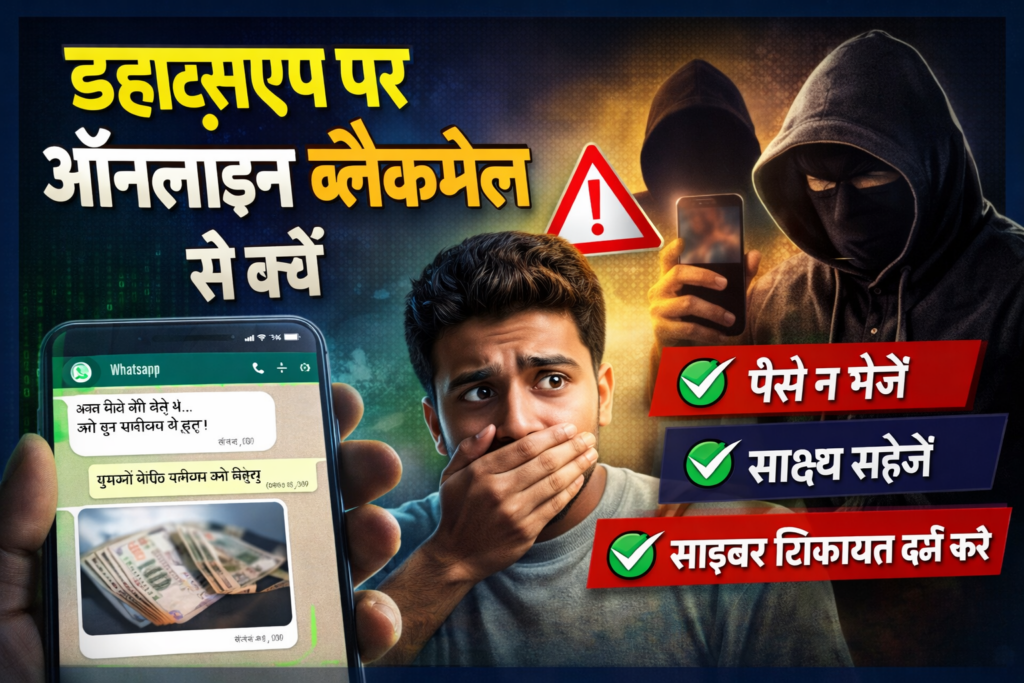
Online Blackmail on WhatsApp – What to Do in India

Online blackmail on WhatsApp has become a serious and growing cybercrime in India. Fraudsters often threaten to leak private photos, videos, chats, or personal information unless money is paid. These cases may involve unknown callers, fake social media profiles, dating app scams, or hacked accounts. If you are facing blackmail on WhatsApp, do not panic. Immediate and structured action can protect you legally and digitally. What Is WhatsApp Blackmail? WhatsApp blackmail usually involves: Threats to leak private photos or videos Sextortion scams Demands for money through UPI or bank transfer Threats to send content to family or friends Impersonation or fake edited images Threatening voice or video calls Scammers often create urgency and fear to force quick payment. Immediate Steps to Take 1. Do Not Pay Any Money Paying the blackmailer: Does not guarantee deletion of content Encourages further demands Makes you a repeated target Most blackmailers continue demanding more money after first payment. 2. Preserve All Evidence Take screenshots of: WhatsApp chats Contact number Payment demands UPI ID or bank details Call logs Threat messages Do not delete chats before saving evidence. 3. Block and Report the Number Inside WhatsApp: Block the contact Use the “Report” option This helps WhatsApp investigate and possibly remove the account. 4. File Cyber Crime Complaint Immediately Register a complaint through the National Cyber Crime Reporting Portal. Provide: Screenshots Phone number of blackmailer Payment details (if any) Description of incident Early reporting increases chances of tracking the offender. 5. Lodge FIR at Cyber Crime Police Station Serious cases involving: Nude video threats Minor victims Financial extortion Repeated harassment Should be reported at the nearest cyber crime police station. Relevant legal provisions may include: Information Technology Act, 2000 (for publishing or transmitting obscene content, hacking, identity misuse) Bharatiya Nyaya Sanhita, 2023 (for extortion, criminal intimidation, cheating) Procedure under Bharatiya Nagarik Suraksha Sanhita, 2023 If Private Content Is Already Shared If your private images or videos are circulated: Immediately file a complaint Report the content on the platform Seek legal takedown assistance Inform investigating authorities about URLs Law enforcement can request removal and track IP details. Common WhatsApp Blackmail Scams Sextortion Scam – Fake profile engages in video call and records screen. Fake Girl Profile Scam – Sends explicit content and later threatens exposure. Hacked Account Blackmail – Claims to have access to your contacts. Morphing / Edited Images – Using fake edited photos to threaten. Understanding the pattern helps reduce panic. Important Safety Tips Never share intimate content online Avoid unknown video calls Enable two-step verification in WhatsApp Keep social media accounts private Do not share OTPs Avoid clicking suspicious links What NOT to Do Do not transfer money Do not negotiate Do not respond emotionally Do not delete evidence Do not delay complaint Can Blackmailers Really Leak Content? Sometimes scammers: Do not actually possess any content Use fear tactics Send bulk threats to random numbers Even if content exists, legal action can be taken and platforms are required to cooperate. Online blackmail on WhatsApp is a punishable cyber offence in India. The most important actions are: Stay calm Preserve evidence Do not pay Report immediately Quick legal reporting increases the chances of tracing the offender and preventing further harm. Disclaimer This content is provided solely for informational and educational purposes. It does not constitute legal advice or professional consultation. This article is not a marketing advertisement and is not intended for solicitation, engagement, or promotional purposes. Readers should seek appropriate legal guidance based on their specific situation.

Online Blackmail on WhatsApp – What to Do in India Read More »

Cyber Lawyer | Online Scam | Money Loss Online ?

Online investment scams are increasing rapidly across India. From stock trading fraud and crypto scams to fake IPO schemes and forex platforms, thousands of investors lose their hard-earned money every year. In such situations, timely legal action becomes crucial. Advocate Deepak focuses on handling investment scam and online financial fraud matters, assisting victims in taking structured legal steps toward fund recovery. Advocate Deepak works in the area of cybercrime, financial fraud, and online investment scam cases. His practice involves assisting victims who have lost money in: Online stock trading scams Cryptocurrency / USDT fraud Forex trading fraud Fake investment apps Telegram/WhatsApp investment group scams IPO and pre-listing share scams Online portfolio management fraud The focus is on lawful recovery procedures through proper legal channels. Legal Approach to Investment Scam Recovery Investment fraud recovery requires a systematic legal strategy. Advocate Deepak assists clients through the following structured process: 1. Case Assessment Review of transaction records Analysis of bank statements and crypto transfers Examination of communication with fraudsters Identifying potential recovery routes Each case is evaluated individually based on evidence and transaction trail. 2. Filing Cyber Crime Complaint Proper drafting of cybercrime complaints with complete documentation improves investigation efficiency. Legal assistance ensures: Accurate detailing of fraud events Proper submission of digital evidence Clear identification of beneficiary accounts Timely complaint increases the possibility of account freeze. 3. FIR Registration & Legal Representation Where required, Advocate Deepak assists in: Drafting formal complaint applications Following up with investigating authorities Representing victims during legal proceedings Ensuring procedural compliance Early legal involvement often strengthens the recovery process. 4. Bank Account Freeze & Fund Tracing In cases where funds are transferred through: Bank accounts UPI Payment gateways Cryptocurrency exchanges Legal representation helps coordinate with authorities to initiate freeze requests and trace transaction chains. 5. Court Remedies (If Required) In high-value fraud cases, legal remedies may include: Filing petitions before appropriate courts Seeking attachment of accounts Initiating criminal prosecution Filing recovery proceedings Each step depends on the complexity and scale of the fraud. Why Legal Assistance Is Important in Investment Scams Many victims delay action or rely on informal recovery agents. This often reduces the chances of recovery. Professional legal assistance helps in: Proper documentation Avoiding procedural errors Faster escalation to authorities Protecting victim’s legal rights Avoiding secondary “recovery scams” Common Mistakes Victims Make Sending additional “withdrawal fees” Trusting fake recovery agents Delaying complaint filing Not preserving digital evidence Ignoring bank freeze timelines Immediate and structured legal action is critical. Important Note on Recovery Fund recovery depends on several factors: Speed of complaint filing Availability of funds in beneficiary accounts Traceability of transactions Cross-border involvement Nature of payment (bank vs crypto) No genuine lawyer guarantees 100% recovery, but timely legal steps significantly improve the chances. Investment scams can cause serious financial and emotional stress. However, victims are not without legal remedies. With proper documentation, timely complaint filing, and structured legal action, recovery efforts can be initiated effectively. Advocate Deepak works in the area of online financial fraud and investment scam matters, assisting victims in navigating the legal recovery process through appropriate legal channels. Disclaimer This content is provided solely for informational purposes. It does not constitute legal advice or guarantee of fund recovery. Recovery outcomes depend on the specific facts and circumstances of each case. Readers are advised to seek professional legal consultation for their individual situation.

Cyber Lawyer | Online Scam | Money Loss Online ? Read More »

Online Stock Trading Scam Recovery | Cyber Lawyer

Online stock trading scams are rapidly increasing in India. Fraudsters create fake trading apps, impersonate SEBI-registered advisors, run Telegram/WhatsApp stock tips groups, and promise guaranteed profits. Victims are shown fake profits on dashboards, but withdrawals are blocked unless additional “tax” or “processing fees” are paid. If you have been cheated in an online stock trading scam, this guide explains your legal options and recovery process in India. What Is an Online Stock Trading Scam? An online stock trading scam usually involves: Fake trading apps or cloned broker websites Impersonation of SEBI-registered analysts Guaranteed high returns in short time Manipulated trading dashboards Forced additional payments for withdrawal Fake IPO or pre-listing investment schemes These frauds typically involve bank transfers, UPI, mule accounts, or cryptocurrency wallets. Immediate Steps After Stock Trading Fraud 1. Stop Sending Any Further Money Scammers often demand: “Withdrawal clearance fee” “Tax payment” “Margin shortfall” “Account upgrade fee” Do not pay any additional amount. These are recovery traps. 2. Preserve All Evidence Collect and securely store: Bank transfer receipts UPI transaction IDs Trading app screenshots Fake profit dashboard screenshots Chat history (WhatsApp/Telegram) Website URLs Contact numbers and email IDs Strong documentation improves the chances of investigation. 3. File Cyber Crime Complaint Register a complaint through the National Cyber Crime Reporting Portal as soon as possible. Early reporting increases the possibility of freezing beneficiary bank accounts before funds are withdrawn. 4. Lodge FIR at Cyber Crime Police Station Registering an FIR strengthens your case and enables authorities to: Issue debit freeze requests Obtain KYC details of beneficiary accounts Track IP addresses and devices Identify mule account holders Send notices to fake trading platforms Legal provisions generally involved include: Bharatiya Nyaya Sanhita, 2023 (cheating, impersonation, fraud) Information Technology Act, 2000 (cyber offences) Bharatiya Nagarik Suraksha Sanhita, 2023 (investigation procedure) Can You Recover Money from a Stock Trading Scam? Recovery depends on: How quickly the complaint was filed Whether funds are still in beneficiary accounts Whether the accounts are KYC-verified Whether crypto was used Whether the accused is traceable If funds are frozen early, partial or full recovery may be possible. If Payment Was Made Through Bank or UPI Authorities may freeze beneficiary accounts Linked accounts can be traced Reversal may be possible if funds remain Time is critical — report immediately. If Payment Was Made Through Cryptocurrency Recovery depends on: Whether funds were sent to a centralized exchange Whether exchange KYC details are available Whether assets remain in wallet Crypto recovery is more complex but sometimes traceable. Beware of Fake Recovery Agents After reporting fraud, victims are often contacted by: “Recovery experts” Fake legal consultants People demanding advance fees for refund No genuine authority asks for money to release frozen funds. Avoid paying anyone promising guaranteed recovery. Additional Legal Remedies If accused persons are identified, you may: Seek criminal prosecution Request attachment of bank accounts Initiate civil recovery proceedings File complaint before appropriate regulatory authority Legal advice is recommended for high-value frauds. How to Avoid Stock Trading Scams in Future Verify broker registration on official SEBI records Avoid guaranteed profit schemes Do not trust unknown Telegram investment groups Check website domain age Avoid sharing OTPs or login credentials Research company authenticity before investing Online stock trading scams are serious financial crimes. However, quick reporting, proper documentation, and structured legal action can increase recovery chances. The most important factor is immediate complaint and cooperation with authorities. If you have been cheated, act fast — delay reduces recovery probability. Disclaimer This content is provided solely for informational and educational purposes. It does not constitute legal advice, financial advice, or professional consultation of any kind. This article is not a marketing advertisement and is not intended for solicitation, engagement, or promotional purposes. Readers are advised to seek appropriate professional guidance for their specific situation.

Online Stock Trading Scam Recovery | Cyber Lawyer Read More »

What Is the Information Technology Act 2000 and Cyber Law in India?

In today’s digital world, most communication, banking, business, and personal interactions happen online. With this digital growth, cybercrimes such as hacking, online fraud, identity theft, data breaches, and online harassment have increased. To regulate digital activities and punish cyber offences, India enacted the Information Technology Act, 2000, commonly known as the IT Act, 2000. This blog explains in detail what the IT Act 2000 is, what cyber law means, key provisions, punishments, and its importance in India. What Is Cyber Law? Cyber law refers to laws that govern: Use of the internet Digital transactions Electronic communication Cybercrimes Data protection Online privacy In India, cyber law primarily originates from the IT Act, 2000, along with relevant provisions of: Bharatiya Nyaya Sanhita, 2023 (for offences like cheating, defamation, intimidation) Bharatiya Nagarik Suraksha Sanhita, 2023 (criminal procedure) Together, these laws regulate digital conduct and penalize cyber offences. आज के डिजिटल युग में अधिकतर संचार, बैंकिंग, व्यापार और व्यक्तिगत गतिविधियाँ ऑनलाइन होती हैं। डिजिटल उपयोग बढ़ने के साथ-साथ साइबर अपराध जैसे हैकिंग, ऑनलाइन फ्रॉड, पहचान की चोरी (Identity Theft), डाटा चोरी और ऑनलाइन उत्पीड़न भी बढ़े हैं। इन डिजिटल गतिविधियों को नियंत्रित करने और साइबर अपराधों को दंडित करने के लिए भारत सरकार ने Information Technology Act, 2000 (आईटी एक्ट 2000) लागू किया। यह ब्लॉग विस्तार से समझाता है कि आईटी एक्ट 2000 क्या है, साइबर कानून का अर्थ क्या है, इसके प्रमुख प्रावधान, दंड और भारत में इसका महत्व क्या है। साइबर कानून क्या है? साइबर कानून उन कानूनों को कहा जाता है जो निम्न विषयों को नियंत्रित करते हैं: इंटरनेट का उपयोग डिजिटल लेन-देन इलेक्ट्रॉनिक संचार साइबर अपराध डाटा सुरक्षा ऑनलाइन गोपनीयता भारत में साइबर कानून मुख्य रूप से आईटी एक्ट 2000 से संचालित होता है, साथ ही निम्न कानून भी लागू होते हैं: Bharatiya Nyaya Sanhita, 2023 (धोखाधड़ी, मानहानि, धमकी आदि अपराधों के लिए) Bharatiya Nagarik Suraksha Sanhita, 2023 (आपराधिक प्रक्रिया के लिए) ये सभी कानून मिलकर डिजिटल गतिविधियों को नियंत्रित करते हैं और साइबर अपराधियों को दंडित करते हैं। सूचना प्रौद्योगिकी अधिनियम, 2000 क्या है? आईटी एक्ट 2000 का उद्देश्य है: इलेक्ट्रॉनिक रिकॉर्ड को कानूनी मान्यता देना डिजिटल हस्ताक्षर को मान्यता देना ई-कॉमर्स और ई-गवर्नेंस को बढ़ावा देना साइबर अपराधों को परिभाषित करना और दंडित करना संवेदनशील डिजिटल डाटा की सुरक्षा करना साल 2008 में इसमें संशोधन किया गया ताकि साइबर अपराधों के खिलाफ कानून और मजबूत हो सके। आईटी एक्ट 2000 के प्रमुख उद्देश्य इलेक्ट्रॉनिक अनुबंधों को कानूनी मान्यता ऑनलाइन बैंकिंग और ई-कॉमर्स को सक्षम बनाना हैकिंग और पहचान की चोरी को रोकना व्यक्तिगत डाटा की सुरक्षा अश्लील सामग्री के प्रकाशन पर दंड सोशल मीडिया प्लेटफॉर्म जैसे मध्यस्थों (Intermediaries) को विनियमित करना यह अधिनियम सुनिश्चित करता है कि भारत में डिजिटल लेन-देन कानूनी रूप से वैध हों। आईटी एक्ट 2000 के अंतर्गत प्रमुख अपराध 1. हैकिंग और अनधिकृत प्रवेश किसी कंप्यूटर सिस्टम में बिना अनुमति प्रवेश करना या डाटा चोरी करना दंडनीय अपराध है। 2. पहचान की चोरी (Identity Theft) किसी अन्य व्यक्ति का पासवर्ड, OTP या डिजिटल हस्ताक्षर का दुरुपयोग करना। 3. ऑनलाइन धोखाधड़ी फिशिंग, फर्जी निवेश योजनाएँ, ऑनलाइन जॉब फ्रॉड, बैंकिंग स्कैम आदि। 4. गोपनीयता का उल्लंघन बिना अनुमति निजी फोटो या वीडियो को साझा करना। 5. अश्लील या आपत्तिजनक सामग्री का प्रकाशन बिना सहमति आपत्तिजनक सामग्री अपलोड करना या प्रसारित करना। 6. साइबर आतंकवाद सरकारी सिस्टम या महत्वपूर्ण डिजिटल संरचना पर हमला करना। अपराध की गंभीरता के अनुसार सजा में कारावास और जुर्माना शामिल हो सकता है। मध्यस्थों (Social Media Platforms) की भूमिका आईटी एक्ट निम्न संस्थाओं को भी नियंत्रित करता है: सोशल मीडिया प्लेटफॉर्म होस्टिंग कंपनियाँ इंटरनेट सेवा प्रदाता उन्हें वैध नोटिस मिलने पर अवैध सामग्री हटानी होती है। ऐसा न करने पर कानूनी कार्रवाई हो सकती है। इलेक्ट्रॉनिक अनुबंध और डिजिटल हस्ताक्षर आईटी एक्ट का एक महत्वपूर्ण योगदान है: इलेक्ट्रॉनिक समझौतों को कानूनी मान्यता डिजिटल हस्ताक्षर की वैधता ऑनलाइन कॉन्ट्रैक्ट की वैधता इसी कारण आज ऑनलाइन बैंकिंग और ई-कॉमर्स सुरक्षित और कानूनी रूप से मान्य हैं। आईटी एक्ट में संशोधन 2008 के संशोधन में निम्न विषयों को मजबूत किया गया: डाटा सुरक्षा साइबर आतंकवाद पहचान की चोरी बाल अश्लीलता कंपनियों की डाटा सुरक्षा जिम्मेदारी ये बदलाव बढ़ते साइबर खतरों को ध्यान में रखकर किए गए। भारत में साइबर कानून का महत्व साइबर कानून इसलिए आवश्यक है क्योंकि: अधिकांश वित्तीय लेन-देन डिजिटल हैं व्यवसाय ऑनलाइन संचालित होते हैं व्यक्तिगत डाटा इलेक्ट्रॉनिक रूप में संग्रहित है सोशल मीडिया प्रतिष्ठा को प्रभावित करता है साइबर अपराध तेजी से बढ़ रहे हैं बिना साइबर कानून के डिजिटल दुनिया में कानूनी सुरक्षा संभव नहीं है। भारत में सामान्य साइबर अपराध ऑनलाइन निवेश धोखाधड़ी UPI फ्रॉड क्रिप्टोकरेंसी स्कैम सोशल मीडिया ब्लैकमेल डाटा चोरी ऑनलाइन मानहानि फर्जी पहचान से धोखाधड़ी आईटी एक्ट और अन्य आपराधिक कानून इन अपराधों पर कानूनी कार्रवाई सुनिश्चित करते हैं। साइबर कानून व्यक्तियों की कैसे सुरक्षा करता है? ऑनलाइन अपराधियों को दंडित करता है गोपनीयता की रक्षा करता है पीड़ितों को शिकायत दर्ज करने का अधिकार देता है अदालत में डिजिटल साक्ष्य को मान्यता देता है ऑनलाइन प्लेटफॉर्म की जवाबदेही तय करता है पीड़ित व्यक्ति साइबर पुलिस स्टेशन और न्यायालय में कानूनी कार्रवाई कर सकते हैं। What Is the Information Technology Act, 2000? The IT Act, 2000 was enacted to: Provide legal recognition to electronic records Recognize digital signatures Facilitate e-commerce and e-governance Define and punish cybercrimes Protect sensitive digital data It was later amended in 2008 to strengthen cybercrime provisions. Objectives of the IT Act, 2000 The major objectives include: Legal recognition of electronic contracts Enabling online banking and e-commerce Preventing hacking and identity theft Protecting personal data Penalizing publication of obscene content Regulating intermediaries (social media platforms) The Act ensures that digital transactions are legally valid in India. Important Offences Under the IT Act, 2000 1. Hacking and Unauthorized Access Unauthorized access to computer systems, data theft, and hacking are punishable offences. 2. Identity Theft Using another person’s password, OTP, or digital signature fraudulently. 3. Online Cheating and Fraud Phishing, fake investment schemes, online job fraud, and banking scams. 4. Violation of Privacy Capturing, publishing, or transmitting private images without consent. 5. Publishing Obscene or Sexually Explicit Content Uploading or sharing explicit content online

What Is the Information Technology Act 2000 and Cyber Law in India? Read More »

What to Do After Online Investment Fraud in India

Online investment fraud is increasing rapidly in India. Victims are lured through fake stock trading apps, crypto platforms, forex schemes, IPO allotment scams, or guaranteed high-return plans. Once money is invested, withdrawals are blocked and additional “fees” are demanded. If you have been cheated in an online investment scam, do not panic. Immediate and structured action can improve your chances of recovery. Understanding Online Investment Fraud Common types of online investment fraud include: Fake stock trading platforms Crypto / USDT investment scams Forex trading fraud Fake IPO allotment schemes Telegram or WhatsApp “investment groups” Apps showing fake profits Romance-linked investment scams These frauds usually involve bank transfers, UPI payments, or cryptocurrency transactions. Immediate Steps to Take After Online Investment Fraud 1. Stop Further Payments Immediately Scammers often demand: “Tax” or “withdrawal fee” “Account verification charge” “Security deposit” “Unlocking fee” Do not send any additional money. These are tactics to extract more funds. 2. Preserve All Evidence Collect and store: Bank statements UPI transaction IDs Wallet addresses (if crypto used) Screenshots of chats Fake app screenshots Website links Contact numbers and email IDs Strong documentation improves investigation quality. 3. Register Official Cyber Crime Complaint File a complaint through the: National Cyber Crime Reporting Portal Provide complete transaction details and upload all supporting documents.Your complaint will be forwarded to the concerned State Cyber Police. Early reporting increases the chances of freezing funds. 4. File FIR at Cyber Crime Police Station Registering an FIR strengthens your legal position. It enables authorities to: Issue debit freeze request to banks Freeze beneficiary accounts Issue notice to investment platforms Obtain KYC details Track IP addresses Initiate cross-state investigation Legal action is governed by: Bharatiya Nyaya Sanhita, 2023 Information Technology Act, 2000 Procedure under Bharatiya Nagarik Suraksha Sanhita, 2023 5. If Money Was Sent Through Bank or UPI If reported quickly: Beneficiary bank account can be temporarily frozen Funds may be reversed if still available Investigation can trace linked accounts Time is crucial in banking-related frauds. 6. If Money Was Sent Through Cryptocurrency Recovery depends on: Whether funds were sent to centralized exchange (with KYC) Whether wallet can be traced Whether funds remain in exchange Police may issue legal notice to exchanges and request account freeze. 7. Beware of Recovery Scams After online investment fraud, victims often receive calls from: Fake recovery agents “Cyber experts” promising guaranteed refund People demanding advance fees Do not trust anyone asking for money to recover your lost investment. Recovery should happen only through official investigation or court process. 8. Legal Remedies Through Court If accused is identified, you may: Pursue criminal prosecution Seek attachment of bank accounts File civil recovery suit Request court-monitored investigation In high-value fraud cases, courts may order freezing of assets. 9. How Long Does Recovery Take? Immediate freeze actions: If funds traceable Investigation: Several weeks to months Court proceedings: Depends on complexity The sooner you report, the better your recovery chances. Important Reminder After online investment fraud: Do not panic Do not hide the matter Do not delay reporting Do not send more money You are a victim of financial cybercrime, and Indian law provides protection. Online investment fraud is a serious offence. Whether it involves stock trading, crypto, forex, or fake investment apps, structured legal action can help trace and possibly recover your money. Immediate complaint, FIR registration, evidence preservation, and cooperation with authorities are key to increasing the chances of recovery. Disclaimer This content is purely for educational and informational purposes. Victims of financial cyber fraud should report the matter immediately to official cybercrime authorities and seek proper legal guidance.

What to Do After Online Investment Fraud in India Read More »

Someone Cheated Me in Crypto Investment – How to Recover Money

Cryptocurrency investment scams are increasing rapidly in India. Many individuals are trapped through fake promises of high returns in Bitcoin, USDT, forex trading, or AI-based crypto platforms. After investing, victims often find withdrawals blocked, additional “tax” or “unlock fees” demanded, and eventually the fraudsters disappear. If someone has cheated you in a crypto investment scheme, do not panic. Indian law provides remedies for financial cyber fraud, and timely legal action can significantly improve the chances of recovery. How Crypto Investment Fraud Usually Happens Most crypto fraud cases follow a similar pattern: Contact through WhatsApp, Telegram, Instagram, or dating apps Promise of guaranteed daily or weekly profit Fake trading dashboard showing artificial gains Small initial withdrawal allowed to build trust Large investment requested Withdrawal blocked or additional charges demanded These scams may involve UPI transfers, bank payments, or deposits into fake crypto apps and trading platforms. Legal Position in India Crypto fraud is treated as financial cheating and cybercrime under Indian law: Bharatiya Nyaya Sanhita, 2023 – Covers offences like cheating, criminal breach of trust, extortion, and criminal intimidation. Information Technology Act, 2000 – Applies when online deception, digital platforms, or electronic communication are involved. Investigation procedure is governed by Bharatiya Nagarik Suraksha Sanhita, 2023. If the fraud involves cross-border crypto wallets or foreign exchanges, authorities may coordinate across states and internationally. Where to File a Complaint Victims should register a complaint through the official government platform: National Cyber Crime Reporting Portal Provide complete details such as: Bank transaction proof UPI ID or beneficiary account number Crypto wallet address Screenshots of chats Fake investment dashboard images Payment receipts The complaint is forwarded to the concerned State Cyber Police for investigation. Registering an FIR Apart from the online complaint, filing an FIR at the nearest Cyber Crime Police Station strengthens your case. A formal FIR enables authorities to: Freeze beneficiary bank accounts Issue notices to crypto exchanges Trace IP addresses Obtain KYC details linked to exchange wallets Conduct cross-state investigation An FIR gives legal backing to further recovery steps. Can Crypto Money Be Recovered? Recovery depends on how the funds were transferred. If Money Was Sent Through Bank or UPI Authorities may issue a debit freeze request. If funds are still available in the beneficiary account, partial or full recovery is possible. If Money Was Sent Through Crypto (USDT / Bitcoin) If transferred to an exchange wallet with KYC compliance, tracing is possible. Police can issue legal notice to the exchange and request account freeze. If funds moved to private wallets, recovery becomes technically complex but digital tracing is still attempted. Early reporting significantly increases the chances of successful recovery. Warning About Fake Recovery Agents After becoming victims, many people are contacted by so-called “recovery experts” promising guaranteed refunds. Be cautious: Many such agents are part of new scam networks. Genuine recovery happens only through official investigation or court proceedings. Never pay additional money to unknown persons claiming to recover funds. Court Remedies If the accused is identified, you may: Pursue criminal prosecution for cheating Seek attachment of bank accounts or assets Initiate civil recovery proceedings Request court-monitored investigation In high-value fraud cases, courts may order freezing or attachment of properties linked to the accused. Important Documents to Preserve Maintain proper records of: Bank statements Transaction IDs Wallet addresses Chat conversations Screenshots of the fake platform Contact details of fraudster Strong documentation strengthens investigation and recovery prospects. Time Frame for Action Account freezing actions may begin quickly if funds are still traceable. Investigation may take several weeks depending on complexity. Court proceedings depend on jurisdiction and evidence. Delay in reporting reduces the likelihood of recovery. If someone cheated you in crypto investment: Stop further payments immediately Preserve all digital evidence Register official complaint File FIR Cooperate fully with investigation Crypto fraud is punishable under Indian law. While recovery depends on the circumstances, prompt legal action gives you the best possible chance to recover your money and ensure that the offenders are brought to justice. Disclaimer This content is purely for educational and informational purposes. If you are a victim of financial cyber fraud, report the matter immediately through official cybercrime authorities

Someone Cheated Me in Crypto Investment – How to Recover Money Read More »

Someone uploaded my private video on social media what to do

If someone has uploaded your private or intimate video on social media without your consent, this is a serious cybercrime. You are legally protected under Indian law, and immediate action can help remove the content quickly. Do not panic. Follow this structured step-by-step process. STEP 1: Do NOT Panic or React Publicly Do not comment on the post Do not threaten the accused online Do not delete evidence Do not try to “settle” privately Public reaction can worsen the situation. STEP 2: Immediately Preserve Evidence Before reporting or blocking: Take clear screenshots of: The video/post Profile name & URL Date & time Number of views/likes Any abusive captions Threat messages (if any) Copy: Direct URL link Account ID Platform name Save everything safely. STEP 3: Report the Video on the Platform Most social media platforms remove non-consensual intimate content quickly. Instagram / Facebook Operated by Meta PlatformsReport under: Nudity / Sexual exploitation / Non-consensual intimate image YouTube Owned by GoogleFile: Privacy complaint / Sexual content violation Attach screenshots and explain clearly: “This video was uploaded without my consent.” Usually removed within 24–72 hours. STEP 4: File Official Complaint Online (Very Important) Register complaint immediately at: ➤ National Cyber Crime Reporting Portal Website: https://cybercrime.gov.in Choose: Women/Child Related Crime (fast-track category) Upload: Screenshots URL Profile link Description of incident You can also call Cyber Crime Helpline – 1930. This creates official government record. STEP 5: Register FIR at Cyber Police Station Visit nearest Cyber Crime Police Station and file FIR under: ➤ Bharatiya Nyaya Sanhita, 2023 Applicable offences may include: Voyeurism Sexual harassment Criminal intimidation Extortion (if money demanded) ➤ Information Technology Act, 2000 Section 66E – Violation of privacy Section 67A – Publishing sexually explicit material Procedure governed by: ➤ Bharatiya Nagarik Suraksha Sanhita, 2023 Police can: Issue notice to platform Trace IP address Freeze accused bank account Arrest accused STEP 6: If Video Is Going Viral If the video is spreading rapidly: You can: File urgent injunction petition in District Court / High Court Seek immediate removal & blocking order Request search engine de-indexing Court can direct: Immediate deletion Blocking of URLs Removal from search engines STEP 7: Secure Yourself Digitally Immediately: Change all passwords Enable 2-Factor Authentication Check for hidden camera or malware Log out from unknown devices Prevention stops further damage. STEP 8: Emotional & Personal Safety Understand this clearly: ✔ You are a victim✔ You did nothing illegal✔ Law strongly protects you✔ Silence helps criminal Inform: Trusted family member Lawyer Close friend Do not handle alone. How Long Does Removal Take? Platform report: 24–72 hours Cyber cell action: 7–30 days Court order: urgent matters can be immediate Early action increases success rate. Final Conclusion If someone uploaded your private video on social media: Preserve evidence Report on platform File cyber complaint Register FIR Seek court order if required India’s cyber laws are strict against non-consensual intimate content. Immediate legal action can stop further spread and punish the offender. Disclaimer This content is purely for educational and informational purposes. If you are a victim of cybercrime, report immediately to official cybercrime authorities or helpline.

Someone uploaded my private video on social media what to do Read More »

Scroll to Top