
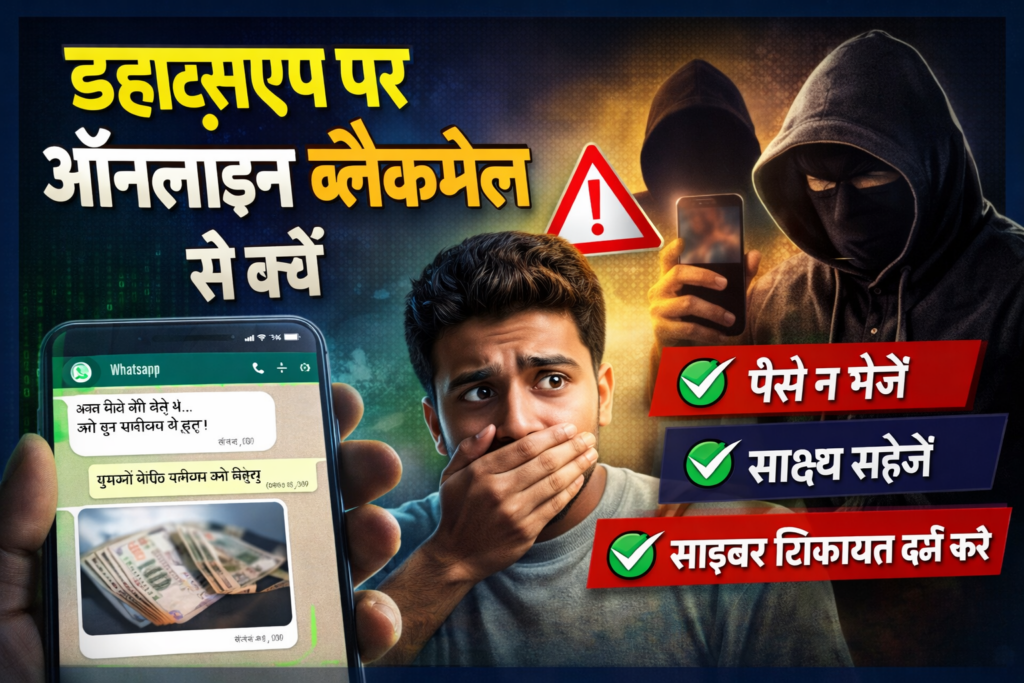
Online Blackmail on WhatsApp – What to Do in India
Online blackmail on WhatsApp has become a serious and growing cybercrime in India. Fraudsters often threaten to leak private photos, videos, chats, or personal information unless money is paid. These cases may involve unknown callers, fake social media profiles, dating app scams, or hacked accounts. If you are facing blackmail on WhatsApp, do not panic. Immediate and structured action can protect you legally and digitally. What Is WhatsApp Blackmail? WhatsApp blackmail usually involves: Threats to leak private photos or videos Sextortion scams Demands for money through UPI or bank transfer Threats to send content to family or friends Impersonation or fake edited images Threatening voice or video calls Scammers often create urgency and fear to force quick payment. Immediate Steps to Take 1. Do Not Pay Any Money Paying the blackmailer: Does not guarantee deletion of content Encourages further demands Makes you a repeated target Most blackmailers continue demanding more money after first payment. 2. Preserve All Evidence Take screenshots of: WhatsApp chats Contact number Payment demands UPI ID or bank details Call logs Threat messages Do not delete chats before saving evidence. 3. Block and Report the Number Inside WhatsApp: Block the contact Use the “Report” option This helps WhatsApp investigate and possibly remove the account. 4. File Cyber Crime Complaint Immediately Register a complaint through the National Cyber Crime Reporting Portal. Provide: Screenshots Phone number of blackmailer Payment details (if any) Description of incident Early reporting increases chances of tracking the offender. 5. Lodge FIR at Cyber Crime Police Station Serious cases involving: Nude video threats Minor victims Financial extortion Repeated harassment Should be reported at the nearest cyber crime police station. Relevant legal provisions may include: Information Technology Act, 2000 (for publishing or transmitting obscene content, hacking, identity misuse) Bharatiya Nyaya Sanhita, 2023 (for extortion, criminal intimidation, cheating) Procedure under Bharatiya Nagarik Suraksha Sanhita, 2023 If Private Content Is Already Shared If your private images or videos are circulated: Immediately file a complaint Report the content on the platform Seek legal takedown assistance Inform investigating authorities about URLs Law enforcement can request removal and track IP details. Common WhatsApp Blackmail Scams Sextortion Scam – Fake profile engages in video call and records screen. Fake Girl Profile Scam – Sends explicit content and later threatens exposure. Hacked Account Blackmail – Claims to have access to your contacts. Morphing / Edited Images – Using fake edited photos to threaten. Understanding the pattern helps reduce panic. Important Safety Tips Never share intimate content online Avoid unknown video calls Enable two-step verification in WhatsApp Keep social media accounts private Do not share OTPs Avoid clicking suspicious links What NOT to Do Do not transfer money Do not negotiate Do not respond emotionally Do not delete evidence Do not delay complaint Can Blackmailers Really Leak Content? Sometimes scammers: Do not actually possess any content Use fear tactics Send bulk threats to random numbers Even if content exists, legal action can be taken and platforms are required to cooperate. Online blackmail on WhatsApp is a punishable cyber offence in India. The most important actions are: Stay calm Preserve evidence Do not pay Report immediately Quick legal reporting increases the chances of tracing the offender and preventing further harm. Disclaimer This content is provided solely for informational and educational purposes. It does not constitute legal advice or professional consultation. This article is not a marketing advertisement and is not intended for solicitation, engagement, or promotional purposes. Readers should seek appropriate legal guidance based on their specific situation.
Online Blackmail on WhatsApp – What to Do in India Read More »


