The Best Cyber Crime Lawyer Online 

Someone Recorded My Video and Is Blackmailing Me – What Should I Do?

Online blackmail and video-based extortion cases are increasing rapidly. If someone has secretly recorded your video (private moment, video call, personal content, etc.) and is threatening to leak it, do not panic — you have strong legal remedies in India. This detailed guide explains what to do immediately, your legal rights, and how to stop the blackmailer. First: Stay Calm and Do NOT Pay Blackmailers usually demand: Money More intimate content Favors Silence Important:If you pay once, they often demand more. Payment does not guarantee deletion. Immediate Steps to Take 1. Do Not Respond Emotionally Avoid threatening or abusing the blackmailer. Stay calm and preserve evidence. 2. Preserve Evidence Take screenshots of: Chat messages Video call logs Social media profiles Payment demands Threat messages Phone numbers or email IDs Do NOT delete chats. Evidence is critical. 3. Do Not Share More Content Never send additional photos or videos. Many cases escalate because victims try to “settle” the matter. 4. Secure Your Accounts Immediately: Change passwords Enable two-factor authentication Log out from all devices Scan phone/laptop for malware 5. Report to Cyber Crime Portal File complaint at the official Government Cyber Crime Portal. You can also call the national cyber helpline number (1930) for urgent financial fraud assistance. In serious cases, visit your nearest Cyber Crime Police Station. Is Secret Recording Illegal in India? Yes. Secretly recording private videos and using them for blackmail can attract serious criminal charges under: IT Act (for publishing/transmitting obscene content) Criminal intimidation laws Extortion laws Privacy violation provisions Voyeurism laws (in certain cases) Punishment may include imprisonment and fine. What If They Threaten to Upload on Social Media? Even if they threaten to post on: Instagram WhatsApp Facebook YouTube Telegram You can: File immediate complaint Seek court injunction to restrain publication Request platform takedown Initiate criminal action Courts in India have passed urgent orders to prevent circulation of private content. What If The Video Is Already Uploaded? Do this immediately: Report the content on the platform File cyber complaint Contact a cyber law professional Send legal takedown notice Approach court for urgent injunction Early action increases chances of removal. Special Advice for Students and Young Adults Many cases involve: Fake online relationships Video call traps Screen recording during private calls Fake profiles If you are a student: Inform trusted adult or family Do not suffer silently Legal system protects victims For Women Victims Law provides stronger protection in cases involving: Morphing Voyeurism Revenge content Sexual harassment Police are required to register FIR in serious cases. Can Blackmailer Be Traced? Yes, in many cases. Through: IP address tracking Device tracing Payment trail Digital forensics Social media logs Even fake accounts can often be traced. Common Myths Myth: If I ignore, it will go away.Reality: Sometimes it escalates. Myth: Police will not help.Reality: Cyber cells actively handle such cases. Myth: My reputation will be destroyed.Reality: Law provides confidentiality protection in sensitive cases. Psychological Advice Blackmail is emotional manipulation. Remember: You are a victim You are not at fault Do not blame yourself Seek support if needed Many cases are resolved legally without content being leaked. Preventive Tips Avoid private video calls with strangers Cover webcam when not in use Do not click unknown links Keep social media private Verify online identities If someone recorded your video and is blackmailing you: Do not panic Do not pay Preserve evidence Report immediately Take legal action Indian law provides strong remedies against online blackmail and extortion. Early action is the key to stopping further damage. Disclaimer:This content is purely for educational and informational purposes. It is not a promotion, advertisement, or solicitation. If you are a victim of cybercrime, report the matter immediately to the official cybercrime reporting mechanism or helpline.

Someone Recorded My Video and Is Blackmailing Me – What Should I Do? Read More »
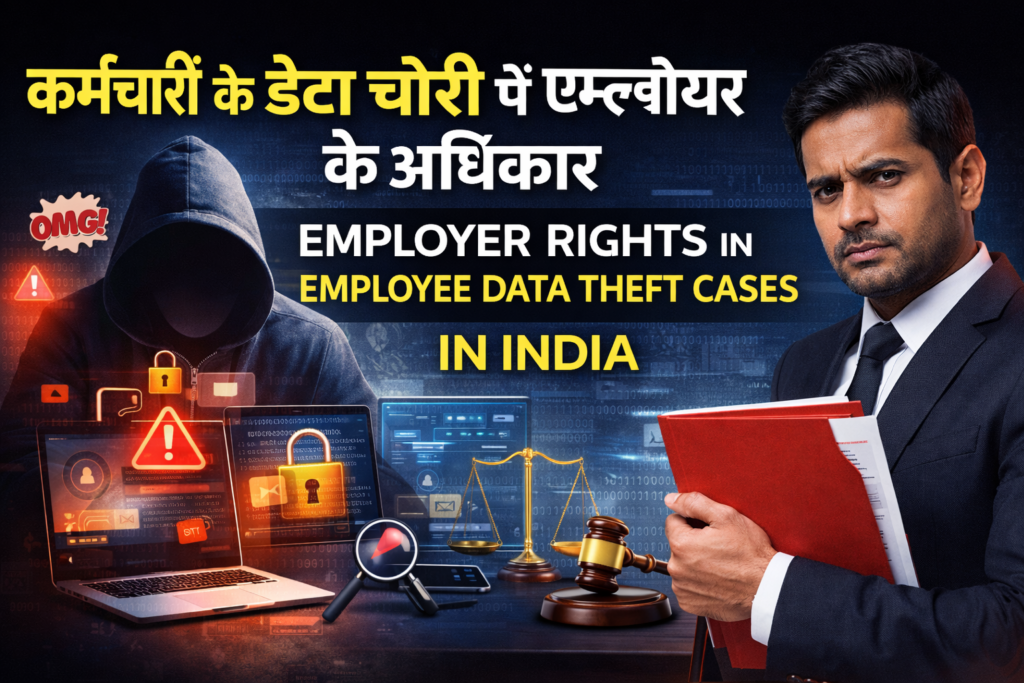
Employer Rights in Employee Data Theft Cases

In today’s digital business environment, company data is a critical asset. Customer databases, trade secrets, pricing models, source codes, financial records, and strategic documents form the backbone of an organization. When an employee steals, copies, or misuses company data, it is not just misconduct — it can be a serious legal violation. This blog explains in detail the rights of an employer in employee data theft cases in India, along with available legal remedies and practical steps. What Is Employee Data Theft? Employee data theft may include: Copying confidential files before resignation Downloading client databases Emailing data to personal account Sharing trade secrets with competitors Using company information to start a competing business Retaining sensitive data after termination Even unauthorized copying — without physical removal — can amount to legal wrongdoing. Legal Rights of an Employer 1. Right to Initiate Disciplinary Action An employer has the right to: Suspend the employee Conduct an internal inquiry Terminate employment for misconduct Withhold certain benefits as per company policy If data theft amounts to gross misconduct, termination without notice may be justified (subject to employment contract and due process). 2. Right to File Criminal Complaint Employers have the right to: File FIR at Cyber Crime Police Station Register complaint under the Information Technology Act, 2000 Seek police investigation Applicable provisions may include: Unauthorized access and data extraction Computer-related offences Criminal breach of trust Cheating If proven, the employee may face imprisonment and fine. 3. Right to Claim Compensation Under civil law, the employer can: File suit for damages Claim compensation for financial loss Seek recovery of profits earned through misuse Claim loss of business or reputation Courts may grant monetary compensation based on evidence. 4. Right to Seek Injunction An employer can approach civil court to obtain: Temporary injunction (urgent relief) Permanent injunction Restraining order preventing further misuse This is crucial where data is being shared with competitors. 5. Right to Protect Trade Secrets Trade secrets and confidential information are legally protected. If an employee violates: Confidentiality clause Non-Disclosure Agreement (NDA) Intellectual Property clause The employer can enforce contractual rights through court action. 6. Right to Seize Company Property The employer has the right to: Recover company laptop and devices Disable login credentials Secure company servers Conduct forensic investigation Digital forensic analysis can strengthen the case. 7. Right to Take Action Against Former Employees Even after resignation, the employer retains rights if: Data was copied before leaving Confidential information is misused post-employment NDA obligations are breached Employment termination does not cancel confidentiality obligations. Importance of Evidence Employers should preserve: Email logs Server access records Download history USB activity logs CCTV footage Internal communication Without proper evidence, legal claims may fail. Can Employer Claim Criminal Breach of Trust? Yes, if: Employee was entrusted with confidential data Data was misused dishonestly Loss was caused to company Such cases can attract serious criminal liability. Preventive Rights & Responsibilities Employers also have the right to implement preventive mechanisms: Strong employment contracts Role-based access control Data encryption Monitoring systems Exit clearance protocols Confidentiality declarations Preventive compliance strengthens future legal claims. Key Practical Steps for Employers If data theft is suspected: Immediately revoke system access Secure servers and passwords Preserve digital logs Conduct internal investigation Issue legal notice Consult cyber law expert File complaint if required Time is critical in such cases. Employers in India have strong legal rights in cases of employee data theft, including: Disciplinary action Criminal prosecution Civil damages Injunction orders Enforcement of NDAs However, success depends on quick response, proper documentation, and legally admissible evidence. Companies must treat data as a protected asset and implement strict compliance systems to minimize risks. Disclaimer:This content is purely for educational and informational purposes. It is not a promotion, advertisement, or solicitation. If you are a victim of cybercrime, report the matter immediately to the official cybercrime reporting mechanism or helpline.

Employer Rights in Employee Data Theft Cases Read More »

Legal Action Against Employee for Stealing Company Data (India)

In the modern digital economy, data is more valuable than physical assets. Client databases, trade secrets, financial records, proprietary software, marketing strategies, vendor contracts, and internal communications form the backbone of a company’s competitive strength. When an employee steals company data, it can lead to: Severe financial losses Loss of client trust Reputational damage Competitive disadvantage Legal exposure This article explains in detail the legal action against an employee for stealing company data in India, including criminal remedies, civil remedies, employer rights, and preventive strategies. What Is Employee Data Theft? Employee data theft occurs when an employee, either during employment or after resignation, unlawfully: Copies confidential files Downloads client databases Transfers data to a personal email or device Shares trade secrets with competitors Retains proprietary information after termination Misuses login credentials Sells company data for personal gain Even if the employee only “copied” data and did not physically remove documents, digital copying is legally actionable. Applicable Laws in India 1. Information Technology Act, 2000 The IT Act provides strong protection against unauthorized access and data misuse. Section 43 Covers unauthorized access, downloading, copying, or extracting data from a computer system. The company can claim compensation. Section 66 If the act is done dishonestly or fraudulently, it becomes a criminal offence punishable with imprisonment and/or fine. Section 72 Deals with breach of confidentiality and privacy where information obtained under lawful contract is disclosed without consent. 2. Bharatiya Nyaya Sanhita (BNS), 2023 (Earlier IPC) Depending on facts, the following offences may apply: Criminal breach of trust Cheating Criminal misappropriation Theft (in certain interpretations involving digital property) Often, IT Act provisions are invoked along with criminal law sections. 3. Contract Law & Employment Agreements Most companies protect themselves through: Confidentiality Clause Non-Disclosure Agreement (NDA) Non-Compete Clause Intellectual Property Ownership Clause Violation of these contractual obligations allows the company to initiate civil proceedings for damages and injunction. Criminal Action Against Employee If the data theft is serious or involves financial fraud, the company can: File an FIR at the Cyber Crime Police Station File a complaint on the National Cyber Crime Reporting Portal Submit digital evidence such as: Server logs Email records Device forensic reports CCTV footage Access logs Police may: Seize laptops and storage devices Conduct forensic examination Arrest the accused (depending on gravity) File charge sheet in court Conviction may result in imprisonment, fine, or both. Civil Remedies Available to the Company Apart from criminal proceedings, the company can file a civil suit for: Permanent injunction (to restrain misuse of data) Interim injunction (urgent temporary relief) Recovery of damages Compensation for financial loss Account of profits earned through misuse Courts can pass urgent restraining orders to prevent further harm. Immediate Steps If You Suspect Data Theft Timely action is critical. Employers should: Immediately disable system access Change passwords and secure servers Preserve digital evidence (do not delete logs) Conduct internal audit or forensic review Issue legal notice Consult an experienced IT & Cyber Law professional Delay can weaken the legal case. Importance of Digital Evidence Digital evidence plays a crucial role in proving data theft. Important evidence includes: Login history Download records USB access logs Cloud storage transfers Email forwarding records Employee communications System surveillance logs Improper handling of evidence can make it inadmissible in court. Can You Terminate the Employee Immediately? In cases of serious misconduct involving data theft, companies may: Suspend the employee Conduct internal disciplinary proceedings Terminate employment as per contract However, proper procedure must be followed to avoid wrongful termination disputes. Liability of Former Employees Even after resignation, legal action can be taken if: Data was copied before leaving Confidential information was shared post-employment NDA obligations were violated Trade secrets were misused Resignation does not erase legal liability. Preventive Measures for Companies Prevention is better than litigation. Companies should implement: 1. Strong Legal Documentation Robust employment contracts with clear confidentiality clauses. 2. Role-Based Access Control Employees should only access data necessary for their role. 3. Data Encryption Sensitive data should be encrypted and monitored. 4. Monitoring & Audit Systems Regular review of unusual downloads and transfers. 5. Exit Management Policy Before relieving an employee: Disable all access Retrieve devices Obtain confidentiality declaration 6. Employee Awareness Training Regular training on data protection and cyber laws. Employee data theft is a serious legal offence under Indian law. Companies have both criminal and civil remedies available. Swift action, proper documentation, and professional legal guidance are essential to protect business interests. Organizations must adopt proactive data protection policies and strong contractual safeguards to minimize the risk of internal data breaches. Disclaimer:This content is purely for educational and informational purposes. It is not a promotion, advertisement, or solicitation. If you are a victim of cybercrime, report the matter immediately to the official cybercrime reporting mechanism or helpline.

Legal Action Against Employee for Stealing Company Data (India) Read More »

Scroll to Top