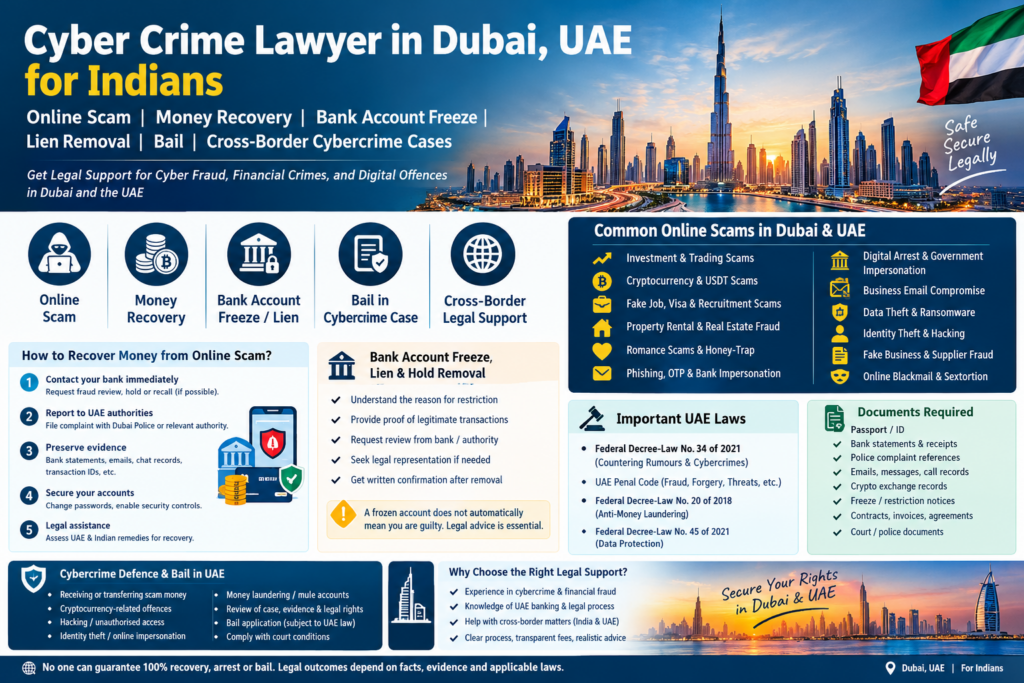
Cyber Crime Lawyer in Dubai UAE for Indians
Cyber Crime Lawyer in Dubai, UAE for Indians – Online Scam, Money Recovery, Bank Account Freeze, Lien Removal, Bail and Cross-Border Cybercrime Cases Indians living, working, investing, studying, or running businesses in Dubai and other parts of the United Arab Emirates (UAE) may face cybercrime problems involving online investment fraud, cryptocurrency scams, fake job offers, property rental fraud, business email compromise, identity theft, hacking, unauthorised bank transfers, online blackmail, and fraudulent trading platforms. A Cyber Crime Lawyer in Dubai, UAE for Indians can help victims understand the applicable legal process, organise digital and banking evidence, prepare complaints, communicate with relevant authorities through lawful channels, and assess possible remedies for financial losses or account restrictions. Indians facing criminal allegations related to online transactions, cryptocurrency, or suspected fraud may also require legal assistance with police investigations, criminal defence, and bail proceedings. Cybercrime cases involving Dubai and India can be complicated because the victim, accused, bank account, payment platform, and investigating authority may be located in different jurisdictions. The correct legal approach depends on where the alleged offence occurred, where the funds were transferred, which authority is investigating the matter, and which country’s laws apply. Advocate Deepak is an Indian IT and Cyber Crime Lawyer whose practice includes Indian cybercrime matters, online financial fraud, bank account lien and freeze disputes, digital evidence, and criminal proceedings in India. For representation before Dubai or UAE authorities and courts, an appropriately licensed UAE legal practitioner may be required. Indian legal assistance does not automatically authorise an advocate to appear before a UAE court. Cybercrime Legal Assistance for Indians in Dubai Dubai is an international centre for banking, employment, property transactions, cryptocurrency-related activity, and cross-border business. These activities can also create opportunities for fraudsters who exploit trust, impersonate legitimate businesses, or use multiple accounts to move suspected criminal proceeds. Indians in Dubai may need legal assistance when they lose money through an online scam, receive a police notification, discover that a bank account has been restricted, or learn that their account has received funds associated with a fraud complaint. A cybercrime lawyer may help assess matters involving: Online financial fraud and scam money recovery. Bank account freeze, debit freeze, lien, hold, and transaction restrictions. Cryptocurrency, Bitcoin, USDT, and fake trading platform scams. Cybercrime complaints involving Dubai, Abu Dhabi, and other UAE locations. Cross-border fraud involving India and the UAE. Identity theft, phishing, hacking, and unauthorised computer access. Fake employment, recruitment, visa, and work-permit scams. Property rental, property investment, and online marketplace fraud. Romance scams, honey traps, sextortion, and online blackmail. Corporate email compromise, data theft, and digital evidence preservation. Criminal defence and bail-related proceedings where available under UAE law. Disputed transfers and accounts alleged to have been used as intermediary or mule accounts. The first step is to determine whether the case is primarily a UAE matter, an Indian matter, or a cross-border matter requiring legal coordination in both countries. Common Online Scams Affecting Indians in Dubai and the UAE 1. Online Investment and Trading Scams Fraudsters promote fake investment platforms through social media, WhatsApp, Telegram, online advertisements, and fraudulent websites. They may promise guaranteed returns from shares, foreign exchange, commodities, cryptocurrency, or other investments. Victims may initially see fabricated profits or receive a small withdrawal. Once they invest a larger amount, the platform may demand additional payments for taxes, account verification, withdrawal approval, or regulatory clearance. A lawyer can help organise the investment records, payment details, communications, website information, and recipient account details for reporting and possible recovery action. 2. Cryptocurrency and USDT Scams Cryptocurrency-related fraud may involve fake exchanges, fraudulent trading groups, impersonation of legitimate platforms, fake investment managers, or peer-to-peer transactions. Relevant evidence may include: Exchange account statements and order IDs. Blockchain transaction hashes and wallet addresses. Bank statements and payment receipts. Peer-to-peer transaction records. Communications with the suspected fraudster. Website details, account identifiers, and advertisements. Details of any exchange or wallet service involved. A transaction may be traceable on a blockchain without revealing the real-world identity of the wallet controller. Tracing does not guarantee that funds can be frozen or recovered. Where an exchange or bank holds relevant assets, action may depend on its procedures, applicable law, and directions from competent authorities. 3. Fake Job, Visa and Recruitment Scams Indians seeking employment in Dubai may encounter fake recruitment agencies that demand money for job offers, employment visas, work permits, medical examinations, security deposits, or accommodation. Preserve the recruiter’s identity, company details, payment receipts, employment offer, email records, and messaging history. The matter may require reporting to the relevant UAE authority, the police, or another competent body, depending on the conduct and circumstances. 4. Property Rental and Real Estate Scams Fraudsters may advertise properties that they do not own or are not authorised to rent. Victims may pay a booking amount, deposit, or advance rent and later discover that the listing or agent was fraudulent. Preserve the property advertisement, agent details, tenancy documents, payment receipts, messages, and any relevant property or broker information. The appropriate remedy depends on whether the facts indicate criminal deception, a contractual dispute, or both. 5. Romance Scams and Honey-Trap Cases A fraudster may build a personal relationship before requesting money for emergencies, travel, medical expenses, customs charges, or investments. In some cases, the victim may later face threats to publish private images or recordings. Victims should preserve communications and payment records, avoid repeated payments to the extortionist, and report threats through appropriate channels. UAE laws relating to privacy, electronic communications, and cybercrime may be relevant depending on the conduct. Do not circulate intimate images or unlawful material as evidence. Preserve information safely and follow lawful reporting procedures. 6. Phishing, OTP Fraud and Bank Impersonation Fraudsters may impersonate bank staff, police officers, immigration officials, delivery companies, or government agencies. They may ask for OTPs, banking passwords, card information, or remote access to a phone or computer. If a suspicious transfer occurs, contact the bank immediately through its verified official channel. Request a fraud review, secure online banking access, and
Cyber Crime Lawyer in Dubai UAE for Indians Read More »


