The Best Cyber Crime Lawyer Online 

Cyber Crime Lawyer in Uttar Pradesh | Advocate Deepak

डिजिटल पेमेंट और ऑनलाइन ट्रांजैक्शन बढ़ने के साथ-साथ उत्तर प्रदेश में साइबर क्राइम मामलों की संख्या तेजी से बढ़ रही है। कई बार लोग बिना किसी गलती के भी साइबर जांच में शामिल हो जाते हैं और अचानक उनका बैंक अकाउंट फ्रीज या लियन मार्क कर दिया जाता है। ऐसे समय में सही कानूनी जानकारी होना बहुत जरूरी है। उत्तर प्रदेश में साइबर अपराध की जांच कई कमिश्नरेट और साइबर पुलिस यूनिट द्वारा की जाती है, जैसे: लखनऊ कमिश्नरेट गौतम बुद्ध नगर (नोएडा) कमिश्नरेट वाराणसी साइबर यूनिट कानपुर नगर साइबर सेल आगरा साइबर पुलिस प्रयागराज साइबर क्राइम यूनिट यह लेख केवल कानूनी जागरूकता और जानकारी के उद्देश्य से तैयार किया गया है। उत्तर प्रदेश में बढ़ते साइबर क्राइम के मामले आजकल सबसे ज्यादा देखने वाले साइबर अपराध: ऑनलाइन निवेश (Investment) फ्रॉड UPI और इंटरनेट बैंकिंग धोखाधड़ी सोशल मीडिया और OLX फ्रॉड क्रिप्टो P2P ट्रांजैक्शन विवाद फर्जी जॉब ऑफर स्कैम लोन ऐप ब्लैकमेलिंग बैंक अकाउंट फ्रीज या लियन मार्क केस इसी कारण लोग अक्सर खोजते हैं: बेस्ट साइबर क्राइम वकील उत्तर प्रदेश नोएडा साइबर क्राइम एडवोकेट बैंक अकाउंट फ्रीज समाधान यूपी साइबर फ्रॉड कानूनी सहायता उत्तर प्रदेश बैंक अकाउंट फ्रीज क्यों किया जाता है? हर फ्रीज का मतलब यह नहीं होता कि अकाउंट होल्डर दोषी है। अकाउंट इन कारणों से फ्रीज हो सकता है: फ्रॉड का पैसा ट्रांजैक्शन चैन के माध्यम से अकाउंट में आना किसी अज्ञात व्यक्ति से पेमेंट प्राप्त होना क्रिप्टो या ऑनलाइन ट्रेडिंग ट्रांजैक्शन फ्लैग होना भुगतान करने वाले द्वारा शिकायत दर्ज कराना संदिग्ध डिजिटल गतिविधि का पता चलना जांच पूरी होने तक पुलिस राशि को सुरक्षित रखने के लिए अकाउंट पर रोक लगाती है। लियन और फ्रीज में अंतर लियन मार्क केवल विवादित राशि ब्लॉक होती है, बाकी पैसा उपयोग किया जा सकता है। डेबिट फ्रीज ऑनलाइन ट्रांजैक्शन अस्थायी रूप से बंद कर दिए जाते हैं। फुल अकाउंट फ्रीज पूरे अकाउंट पर रोक — निकासी और ट्रांसफर दोनों बंद। नई गाइडलाइन के अनुसार पूरे अकाउंट को फ्रीज करने के बजाय लियन लगाना बेहतर माना गया है। गृह मंत्रालय (MHA) की नई SOP 2026 साल 2026 में साइबर वित्तीय धोखाधड़ी मामलों के लिए नई SOP लागू की गई। मुख्य बिंदु केवल संदिग्ध राशि को ब्लॉक किया जाए। बिना आवश्यकता पूरे अकाउंट को फ्रीज न किया जाए। जांच समय सीमा में पूरी की जाए। निर्दोष खाताधारकों को अनावश्यक परेशानी न हो। बैंक और पुलिस के बीच बेहतर समन्वय सुनिश्चित किया गया है। लंबी अवधि तक फ्रीज रखने से पहले सत्यापन जरूरी है। यह नियम आम नागरिकों को राहत देने के उद्देश्य से लागू किया गया है। उत्तर प्रदेश में लियन हटाने की प्रक्रिया यदि आपका अकाउंट लखनऊ, नोएडा, कानपुर, आगरा, वाराणसी या प्रयागराज साइबर सेल द्वारा फ्रीज किया गया है, तो सामान्य प्रक्रिया: बैंक से फ्रीज पुष्टि पत्र प्राप्त करें। बैंक स्टेटमेंट इकट्ठा करें। शिकायत या रेफरेंस नंबर पता करें। ट्रांजैक्शन का स्पष्ट विवरण तैयार करें। साइबर सेल को लिखित आवेदन दें। जांच अधिकारी के साथ सहयोग करें। लियन हटाने / अकाउंट अनफ्रीज के लिए आवेदन प्रारूप सेवा में,जांच अधिकारीसाइबर क्राइम सेलउत्तर प्रदेश पुलिस विषय: बैंक खाते से लियन / डेबिट फ्रीज हटाने हेतु आवेदन महोदय/महोदया, सविनय निवेदन है कि मेरा बैंक खाता संख्या __________, __________ बैंक में संचालित है, जिसे एक साइबर शिकायत के संबंध में लियन/डेबिट फ्रीज किया गया है। मैं एक कानून का पालन करने वाला नागरिक हूं तथा किसी भी प्रकार की धोखाधड़ी गतिविधि में शामिल नहीं हूं। संबंधित लेन-देन सामान्य व्यक्तिगत/व्यावसायिक प्रक्रिया के दौरान प्राप्त हुआ था और मुझे किसी अवैध गतिविधि की जानकारी नहीं थी। अतः निवेदन है कि मेरे दस्तावेजों का सत्यापन कर खाते से लियन/फ्रीज हटाने अथवा केवल विवादित राशि तक सीमित करने की कृपा करें। मैं जांच में पूर्ण सहयोग देने के लिए तैयार हूं। दिनांक:नाम:पता:मोबाइल नंबर:हस्ताक्षर: एडवोकेट दीपक द्वारा साइबर सुरक्षा सुझाव OTP और बैंक विवरण किसी से साझा न करें। अनजान निवेश योजनाओं से दूर रहें। क्रिप्टो ट्रांजैक्शन केवल सत्यापित व्यक्ति से करें। सभी भुगतान का रिकॉर्ड सुरक्षित रखें। धोखाधड़ी होने पर तुरंत रिपोर्ट करें। किसी अन्य व्यक्ति को अपना बैंक अकाउंट उपयोग करने न दें। खाताधारकों के कानूनी अधिकार अकाउंट अनिश्चित समय तक फ्रीज नहीं रखा जा सकता। केवल संबंधित राशि ब्लॉक की जानी चाहिए। आप लिखित स्पष्टीकरण देने का अधिकार रखते हैं। गलत फ्रीज को कानूनी रूप से चुनौती दी जा सकती है। जांच एजेंसी को समय-समय पर समीक्षा करनी होती है। उत्तर प्रदेश में साइबर अपराध नियंत्रण मजबूत हो रहा है, लेकिन निर्दोष नागरिकों के अधिकारों की सुरक्षा भी उतनी ही जरूरी है। सही जानकारी, उचित आवेदन और जांच में सहयोग से बैंक अकाउंट फ्रीज या लियन हटाने की प्रक्रिया तेज हो सकती है। अस्वीकरण (Disclaimer) यह लेख केवल जानकारी और शैक्षणिक उद्देश्य के लिए तैयार किया गया है। इसका उद्देश्य किसी भी प्रकार का विज्ञापन, प्रचार या कानूनी सेवाओं का आग्रह करना नहीं है। किसी विशेष मामले में योग्य विधिक विशेषज्ञ से स्वतंत्र सलाह अवश्य लें।

Cyber Crime Lawyer in Uttar Pradesh | Advocate Deepak Read More »

Cyber Crime Lawyer in Jammu & Kashmir | +91-7303072764 Help

Best Cyber Crime Lawyer in Jammu & Kashmir | Cyber Crime Advocate in Jammu | Bank Account Freeze & Lien Removal Legal Guide (2026) With the rapid growth of digital banking and online transactions, cyber crime complaints are increasing across Jammu & Kashmir. Many individuals today face sudden bank account freezes, lien markings, or cyber police notices even when they have no direct involvement in fraud. Most people become confused about legal procedure, authority jurisdiction, and how to remove account restrictions. Cyber crime matters in Jammu region are commonly handled through: SSP, Crime, CPO Complex, Panjtirthi, Jammu This article explains the legal process, latest 2026 government SOP, lien removal procedure, and preventive cyber safety awareness from a legal perspective. Rise of Cyber Crime Cases in Jammu & Kashmir Digital fraud cases reported in the region mainly involve: Online investment and trading scams UPI and internet banking fraud Crypto P2P transaction disputes Fake job and loan application scams Social media marketplace fraud Unauthorized account usage Bank account debit freeze or lien marking Due to inter-state digital transactions, a complaint registered anywhere in India can lead to freezing of a bank account located in Jammu & Kashmir. This is why people frequently search for: Best cyber crime lawyer in Jammu & Kashmir Cyber crime advocate in Jammu Bank account freeze lawyer J&K Cyber fraud legal help Jammu Understanding Bank Account Freeze and Lien Many account holders do not understand why restrictions are imposed. Lien Mark Only the disputed amount is blocked while remaining balance can be used. Debit Freeze Outgoing transactions are restricted temporarily. Full Account Freeze Complete restriction imposed during investigation stage. As per updated guidelines, authorities are encouraged to apply proportional action instead of freezing entire accounts unnecessarily. New SOP by Ministry of Home Affairs (MHA) – 2026 Update The Government introduced a revised Standard Operating Procedure in 2026 to balance victim protection and innocent account holder rights. Important Points of SOP 2026 Only suspicious or disputed funds should be restricted. Full account freeze should be avoided unless necessary. Verification must be conducted before prolonged restriction. Investigation agencies must follow defined timelines. Banks must cooperate for quicker resolution. Innocent account holders should not face indefinite freezing. This update is aimed at reducing hardship caused by automated freezing systems. Why Accounts Get Frozen in Cyber Crime Investigations Common reasons include: Fraud funds routed through multiple accounts Receiving payment from unknown source Crypto or online trading transactions flagged Chargeback complaint filed by payer Business transactions linked to scam chain Suspicious activity detected by cyber monitoring systems In many situations, the account holder becomes a secondary link without knowledge of fraud. Legal Steps for Lien Removal in Jammu & Kashmir If your account is frozen under cyber investigation, you should: Obtain freeze confirmation from bank. Collect complete account statement. Request complaint or reference number. Prepare explanation of transaction source. Submit formal application to investigating authority. Cooperate with Investigating Officer when called. Proper documentation often speeds up resolution. Application Format for Removal of Lien / Debit Freeze ToThe SSP CrimeCPO Complex, PanjtirthiJammu, Jammu & Kashmir Subject: Request for Removal of Lien / Debit Freeze from Bank Account Respected Sir/Madam, I respectfully submit that my bank account bearing number __________ maintained with __________ Bank has been placed under lien/debit freeze in relation to a cyber complaint. I state that I am a law-abiding citizen and have no involvement in any fraudulent activity. The concerned transaction was received during normal personal/business dealings without knowledge of any illegality. I request your office to kindly verify my records and consider removal of lien/freezing or restrict only disputed amount in accordance with applicable guidelines. I assure full cooperation with the investigation and am ready to provide any documents required. Date:Name:Address:Mobile Number:Signature: Cyber Safety Tips by Advocate Deepak Verify investment platforms before transferring money. Never share OTP, PIN, or screen access. Avoid unknown trading or crypto groups. Maintain transaction invoices and chat records. Immediately report suspicious transactions. Do not allow third parties to use your bank account. Awareness and early reporting play a major role in preventing financial loss. Legal Rights of Account Holders Under updated cyber investigation practices: Account freezing must be justified. Only relevant funds should be restricted. Authorities must review cases periodically. Individuals have the right to submit representation. Wrongful freezing can be legally challenged. Understanding these rights helps reduce unnecessary stress during investigation. When Legal Assistance Becomes Necessary You should consult a cyber crime advocate if: Account remains frozen for long duration. Multiple notices are received from different states. Business operations are affected. Salary or personal expenses are blocked. No investigation update is provided. Professional legal handling ensures proper communication with authorities and banks. Cyber crime investigations are becoming more structured across India, including Jammu & Kashmir. While authorities act to protect fraud victims, innocent account holders must also understand their legal remedies. Following proper procedure, submitting a clear application, and cooperating with investigation can help resolve lien or freeze issues faster. Advocate Deepak is a dedicated Cyber Crime Advocate and IT & Cyber Law Expert handling cyber and IT-related cases across India. He specializes in cyber crime matters, online financial fraud cases, digital fraud investigations, account freeze issues, and bail-related legal services before all courts in India, including District Courts, High Courts, and matters connected with the Supreme Court of India. He completed B.Sc (2008) and MBA (2010), followed by a Diploma in Digital Marketing (2012), and later earned his LL.B from Integrated School of Law, Ghaziabad. He also holds MeBA and DDM qualifications, strengthening his expertise in both legal and digital technology frameworks. With strong knowledge of law, technology, and cybersecurity, Advocate Deepak handles cases related to online fraud, cryptocurrency disputes, identity theft, data theft, IT Act violations, Bail matter in cyber-crime and IT case, cyber police investigations, and digital evidence matters. As a Cyber Law Specialist, he assists individuals and businesses throughout India in cyber complaints, bank account freeze cases, online scam disputes, and legal remedies under IT laws and new criminal

Cyber Crime Lawyer in Jammu & Kashmir | +91-7303072764 Help Read More »

(Advocate Deepak* )~ Cyber Crime Lawyer in Delhi

Delhi has become one of India’s fastest-growing digital cities where online banking, UPI payments, e-commerce, and digital investments are part of everyday life. Along with technological growth, cyber crime cases have also increased significantly. Individuals and businesses are frequently facing online fraud, account hacking, and financial scams, making legal awareness more important than ever. People searching for the best cyber crime lawyer in Delhi usually do so after experiencing financial fraud or receiving notice related to a cyber investigation. Understanding how cyber crime units function and how legal assistance works can help individuals respond correctly and protect their rights. Cyber Crime Units in Delhi To handle increasing digital offences, Delhi Police operates dedicated cyber crime units across different districts. Major cyber crime police stations are located at: Shahdara (PS Shahdara) Rohini (Sector-17) New Delhi District (PS Mandir Marg) Dwarka District These specialized units investigate cyber offences involving digital transactions, online fraud, identity theft, and technology-based crimes. Cyber crime complaints can be registered by victims or by individuals whose bank accounts become part of an investigation. Common Cyber Crime Cases Reported in Delhi A cyber crime lawyer in Delhi regularly deals with cases such as: Online banking and UPI fraud Investment and trading scams Social media account hacking Fake customer care fraud OTP and phishing scams Online job and loan fraud Cryptocurrency transaction disputes Many cyber crimes occur without physical interaction, which makes victims unsure about where to seek help or how investigations proceed. Why People Need a Cyber Crime Advocate in Delhi Cyber crime matters involve both legal and technical procedures. Banks, payment gateways, and police authorities coordinate during investigations, and individuals often find the process difficult to understand. A cyber crime advocate in Delhi helps individuals by: Explaining legal procedures in cyber investigations Drafting complaints and legal representations Responding to police notices or summons Assisting during inquiry and verification Guiding account holders regarding their legal rights Professional legal guidance ensures that communication with authorities remains clear and properly documented. Advocate Deepak is a dedicated Cyber Crime Advocate and IT & Cyber Law Expert handling cyber and IT-related cases across India. He specializes in cyber crime matters, online financial fraud cases, digital fraud investigations, account freeze issues, and bail-related legal services before all courts in India, including District Courts, High Courts, and matters connected with the Supreme Court of India. He completed B.Sc (2008) and MBA (2010), followed by a Diploma in Digital Marketing (2012), and later earned his LL.B from Integrated School of Law, Ghaziabad. He also holds MeBA and DDM qualifications, strengthening his expertise in both legal and digital technology frameworks. With strong knowledge of law, technology, and cybersecurity, Advocate Deepak handles cases related to online fraud, cryptocurrency disputes, identity theft, data theft, IT Act violations, Bail matter in cyber-crime and IT case, cyber police investigations, and digital evidence matters. As a Cyber Law Specialist, he assists individuals and businesses throughout India in cyber complaints, bank account freeze cases, online scam disputes, and legal remedies under IT laws and new criminal laws such as BNS/BNSS. Supported by an experienced legal team and nationwide professional network, Advocate Deepak provides reliable legal representation and advisory services for all cyber and IT law matters across India. एडवोकेट दीपक एक समर्पित साइबर क्राइम वकील एवं आईटी एवं साइबर लॉ विशेषज्ञ हैं, जो पूरे भारत में सभी प्रकार के साइबर और आईटी से जुड़े मामलों को संभालते हैं। वे ऑनलाइन फ्रॉड, डिजिटल धोखाधड़ी, बैंक अकाउंट फ्रीज, साइबर जांच, तथा बेल (जमानत) से जुड़े मामलों में विशेषज्ञता रखते हैं और जिला न्यायालय, हाई कोर्ट तथा भारत के सुप्रीम कोर्ट से संबंधित मामलों में कानूनी सहायता प्रदान करते हैं। उन्होंने बी.एससी (2008) और एमबीए (2010) पूरा करने के बाद डिप्लोमा इन डिजिटल मार्केटिंग (2012) किया तथा बाद में इंटीग्रेटेड स्कूल ऑफ लॉ, गाजियाबाद से एल.एल.बी की डिग्री प्राप्त की। साथ ही उनके पास MeBA और DDM जैसी अतिरिक्त योग्यताएं भी हैं, जो उन्हें कानून और डिजिटल तकनीक दोनों क्षेत्रों में मजबूत समझ प्रदान करती हैं। कानून, तकनीक और साइबर सुरक्षा की गहरी जानकारी के साथ एडवोकेट दीपक ऑनलाइन फ्रॉड, क्रिप्टोकरेंसी विवाद, पहचान चोरी (Identity Theft), डेटा चोरी, आईटी एक्ट से जुड़े अपराध, साइबर पुलिस जांच और डिजिटल एविडेंस मामलों को प्रभावी रूप से संभालते हैं। Bank Account Freeze in Cyber Crime Investigations One of the most common issues today is sudden freezing or debit restriction on bank accounts. Many people discover the problem only when transactions fail. Accounts may be frozen when: Fraudulent funds are traced through transaction chains A complaint includes a transaction linked to the account Authorities temporarily restrict funds during investigation It is important to understand that account freezing does not automatically prove involvement in fraud. Investigation authorities often freeze accounts as a precautionary step. Individuals frequently approach the best cyber crime lawyer in Delhi to prepare explanations and request review or removal of account restrictions. Steps to Take If Your Account Is Frozen If a bank account is placed on hold due to a cyber complaint, the following steps should be taken: Contact the bank and obtain written details of the freezing authority. Request complaint reference or police station information. Collect account statements and transaction records. Prepare a clear written explanation of transactions. Submit a formal application to the concerned cyber crime police station. Maintain copies of all submitted documents. Proper documentation plays an important role in resolving such matters efficiently. Application Format for Account Hold Removal ToThe Station House OfficerCyber Crime Police Station[District – Delhi] Subject: Application for Removal of Debit Freeze on Bank Account Respected Sir/Madam, I respectfully submit that my bank account has been placed under debit restriction in connection with a cyber crime investigation. Name:Bank Name:Account Number:Branch: I wish to state that I have not knowingly participated in any fraudulent activity and am ready to cooperate fully with the investigation. I request your office to kindly review my case and consider removal of the debit freeze after verification. Documents Attached: Identity proof Bank statement Transaction details Supporting explanation Yours faithfully,[Name][Contact Number][Date] When Legal Assistance Becomes Necessary

(Advocate Deepak* )~ Cyber Crime Lawyer in Delhi Read More »

Social Engineering: Meaning, Types, Techniques, Legal Aspects and Prevention

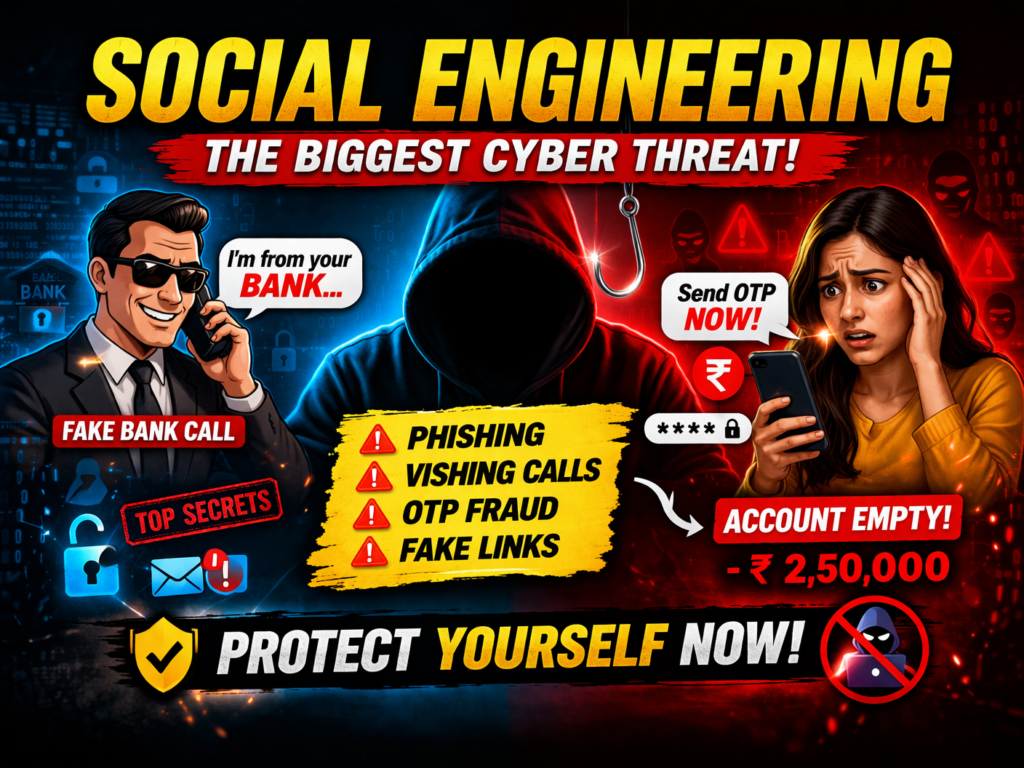
In today’s digital world, most cyber attacks do not begin with advanced hacking tools but with human manipulation. Cyber criminals increasingly rely on psychological tactics instead of technical vulnerabilities to gain access to sensitive information. This method is known as Social Engineering. Social engineering has become one of the most common causes of online fraud, bank account compromise, identity theft, and corporate data breaches. Understanding how it works is essential for individuals, businesses, and professionals to protect themselves from cyber threats. सोशल इंजीनियरिंग एक साइबर अपराध तकनीक है जिसमें अपराधी लोगों को धोखे, डर, लालच या भरोसे में लेकर उनकी गोपनीय जानकारी जैसे OTP, बैंक डिटेल, पासवर्ड या पैसे हासिल करते हैं। इसमें सिस्टम को नहीं बल्कि इंसान की सोच और विश्वास को निशाना बनाया जाता है। • नकली बैंक कॉल या कस्टमर केयर बनकर जानकारी लेना• फिशिंग लिंक या फर्जी मैसेज भेजना• OTP या पासवर्ड मांगना• फर्जी निवेश या नौकरी के ऑफर देना• डर या जल्दी का दबाव बनाकर निर्णय करवाना सावधानी:कभी भी OTP, PIN या बैंक जानकारी किसी के साथ साझा न करें और अनजान लिंक पर क्लिक करने से बचें। #SocialEngineering #CyberAwareness #CyberSafety #OnlineFraud #DigitalSecurity #CyberCrime #StaySafeOnline #CyberAlert What is Social Engineering? Social engineering is a cyber attack technique where criminals manipulate people into revealing confidential information, transferring money, or giving system access by exploiting trust, fear, urgency, or emotions. Instead of hacking computers, attackers “hack human behavior.” Examples include: Asking for OTP pretending to be bank officials Fake customer care calls Fraud investment offers Phishing emails or messages The victim unknowingly cooperates, believing the attacker is genuine. Why Social Engineering is Dangerous Social engineering attacks are highly effective because they target human psychology rather than software security. Reasons for its success include: People trust authority figures Fear-based pressure tactics Lack of cybersecurity awareness Urgency created by scammers Emotional manipulation Even strong cybersecurity systems can fail if a person shares confidential information voluntarily. Common Types of Social Engineering Attacks 1. Phishing Phishing involves fake emails, SMS, or websites designed to look legitimate. Victims are asked to click links or enter sensitive details such as passwords or banking credentials. Example: A fake bank email asking to “verify your account immediately.” 2. Vishing (Voice Phishing) Fraudsters call victims pretending to be: Bank officials Police officers KYC verification agents Technical support executives They convince victims to share OTP, card details, or install remote access apps. 3. Smishing (SMS Phishing) Fraudulent messages containing malicious links are sent via SMS or messaging apps claiming: Prize winnings Package delivery updates Account suspension warnings 4. Pretexting Attackers create a fake story or identity to gain trust. Example: Pretending to be an HR executive requesting employee details. 5. Baiting Criminals offer something attractive such as free software, rewards, or downloads to lure victims into installing malware. 6. Tailgating or Physical Social Engineering Unauthorized individuals gain physical access to restricted areas by pretending to be staff or service personnel. Techniques Used in Social Engineering Cyber criminals commonly use: Authority pressure (“I am calling from the bank”) Urgency (“Your account will be blocked now”) Fear tactics (“Police case will be registered”) Greed (“Guaranteed investment returns”) Trust building through repeated communication These psychological triggers reduce logical thinking and force quick decisions. Real-Life Examples of Social Engineering Fake investment advisors convincing victims to transfer funds Fraudsters posing as cyber police threatening arrest OTP fraud during online transactions Fake job offers collecting personal data Remote access app scams controlling mobile devices Most modern cyber fraud cases involve social engineering at some stage. Legal Provisions in India Related to Social Engineering Fraud Social engineering scams fall under various cyber and criminal laws: Information Technology Act, 2000 Section 66C – Identity theft Section 66D – Cheating by personation using computer resources Indian Penal Code (IPC) Section 419 – Cheating by impersonation Section 420 – Cheating and fraud Punishments may include imprisonment and fines depending on the severity of the offense. Warning Signs of Social Engineering Attacks Calls demanding OTP or passwords Requests for urgent money transfer Unknown links sent via SMS or WhatsApp Pressure to act immediately Requests for remote access installation Offers that sound too good to be true Recognizing these warning signs can prevent fraud. How Social Engineering Attacks Affect Bank Accounts Many bank account freezes and cyber investigations originate from social engineering scams. Fraud money often travels through multiple accounts, and innocent users may unknowingly receive such funds. This leads to: Lien hold on bank accounts Debit freeze instructions Cyber police investigation notices Understanding social engineering helps users avoid becoming part of fraud money trails. Prevention Measures For Individuals Never share OTP, PIN, or passwords Verify caller identity independently Avoid clicking unknown links Do not install remote apps on request Enable two-factor authentication Check investment platforms carefully For Businesses Employee cybersecurity training Access control policies Email verification systems Regular security awareness programs Incident response planning Role of Awareness in Preventing Social Engineering Technology alone cannot stop social engineering attacks. Awareness and education are the strongest defenses. Users who understand manipulation tactics are far less likely to become victims. Organizations and individuals must treat cybersecurity as a behavioral responsibility, not only a technical one. Future Trends in Social Engineering With Artificial Intelligence and deepfake technology, social engineering attacks are becoming more sophisticated. Criminals may soon use: AI-generated voice cloning Deepfake video calls Personalized scam messages using leaked data Automated psychological targeting This makes awareness even more critical. Social engineering is one of the most powerful and dangerous cyber attack methods because it exploits human trust rather than system weaknesses. From phishing emails to fake investment calls, attackers rely on manipulation to succeed. Preventing social engineering requires awareness, caution, and verification before trusting any digital communication. By understanding how these attacks work, individuals and organizations can significantly reduce the risk of cyber fraud and protect their financial and personal security. Disclaimer This content is published for educational and informational purposes only. We are not engaged in any advertisement, solicitation, or client engagement through this content. The information provided should not

Social Engineering: Meaning, Types, Techniques, Legal Aspects and Prevention Read More »

Cyber Terrorism: Meaning, Types, Laws, Risks, and Prevention

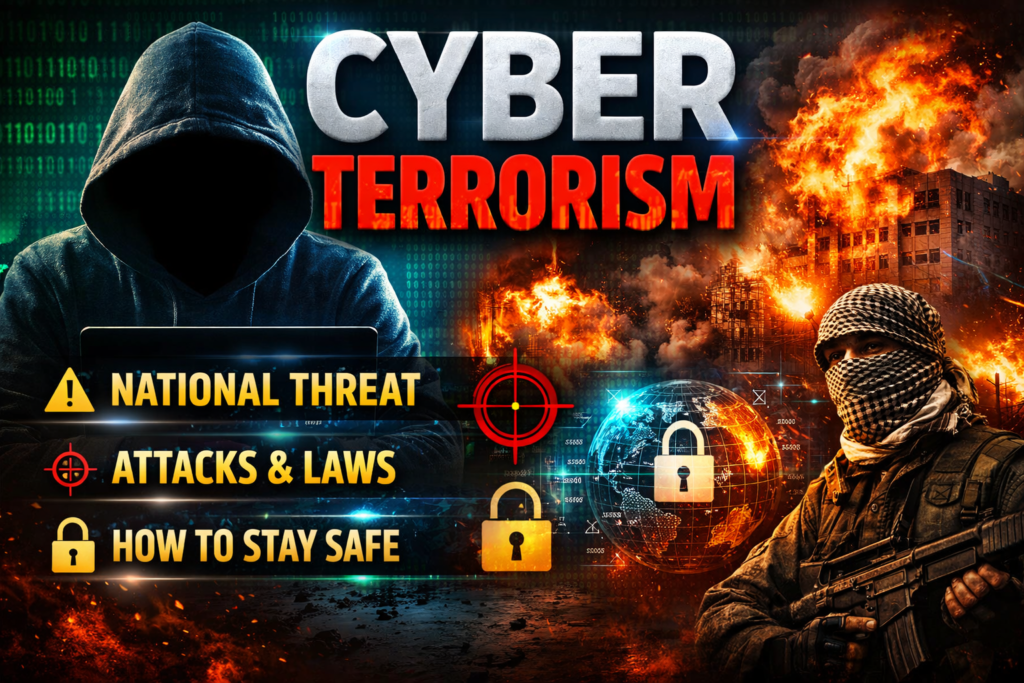
With the rapid growth of digital technology, the internet has become an essential part of modern life. Governments, businesses, financial institutions, healthcare systems, and individuals depend heavily on digital infrastructure. However, this dependence has also created new threats, one of the most dangerous being cyber terrorism. Cyber terrorism is not just hacking or online fraud; it involves using cyberspace to create fear, disrupt national security, damage critical infrastructure, or threaten public safety. It is considered one of the most serious cyber threats faced by nations today. This blog explains cyber terrorism in detail, including its meaning, types, legal provisions, real-world impact, and preventive measures. What is Cyber Terrorism? Cyber terrorism refers to the use of computers, networks, or digital systems to carry out terrorist activities intended to cause panic, fear, economic damage, or disruption of essential services. In simple terms, cyber terrorism occurs when technology is used as a weapon to attack a country, organization, or society for political, ideological, or extremist purposes. Key elements of cyber terrorism include: Intent to threaten national security or public safety Large-scale disruption or destruction Political or ideological motivation Use of digital platforms or cyber tools Difference Between Cyber Crime and Cyber Terrorism Many people confuse cyber crime with cyber terrorism, but both are different. Cyber Crime: Motivated mainly by financial gain Targets individuals or businesses Examples include online fraud, phishing, identity theft Cyber Terrorism: Motivated by ideology or political objectives Targets governments, infrastructure, or society Aims to create fear or instability Types of Cyber Terrorism Attacks 1. Attacks on Critical Infrastructure Cyber terrorists may target: Power grids Water supply systems Airports and railway networks Banking systems Such attacks can paralyze an entire nation. 2. Distributed Denial of Service (DDoS) Attacks Massive traffic is sent to servers to shut down government or defense websites, preventing public access. 3. Data Breaches and Sensitive Information Theft Attackers steal classified military or government data to weaken national security. 4. Propaganda and Radicalization Terrorist groups use social media and encrypted platforms to: Spread extremist ideology Recruit members Fund illegal activities 5. Cyber Espionage Unauthorized access to confidential government or corporate information for strategic advantage. 6. Malware and Ransomware Attacks Malicious software is used to: Destroy systems Lock essential services Demand ransom or create chaos Methods Used by Cyber Terrorists Cyber terrorists commonly use: Phishing attacks Zero-day vulnerabilities Malware injections Botnets Dark web communication Social engineering techniques These methods allow attackers to infiltrate systems without physical presence. Legal Provisions Against Cyber Terrorism in India India has strict legal provisions to combat cyber terrorism. Section 66F of the Information Technology Act, 2000 This is the primary law dealing with cyber terrorism. A person commits cyber terrorism if they: Access protected computer resources without authorization Attempt to threaten unity, integrity, security, or sovereignty of India Cause death, injuries, or disruption of essential services through cyber means Punishment: Imprisonment which may extend to life imprisonment. Other Relevant Laws Indian Penal Code provisions related to national security Unlawful Activities (Prevention) Act (UAPA) Data protection and national security regulations Real-World Impact of Cyber Terrorism Cyber terrorism can have severe consequences: Economic Damage: Large-scale financial losses and market instability. Public Panic: Shutdown of communication or emergency services creates fear among citizens. National Security Threat: Defense systems or intelligence networks may be compromised. Loss of Trust: Citizens lose confidence in digital systems and governance. Why Cyber Terrorism is Increasing Several factors contribute to the rise of cyber terrorism: Increasing digital dependency Weak cybersecurity practices Availability of hacking tools online Anonymous communication platforms Cryptocurrency-based funding channels Lack of cybersecurity awareness Warning Signs of Potential Cyber Terror Activity Organizations should watch for: Unusual network traffic spikes Unauthorized access attempts Sudden system shutdowns Unknown malware detection Suspicious encrypted communications Early detection can prevent major attacks. Prevention and Cyber Security Measures For Governments and Organizations Strengthen cybersecurity infrastructure Regular security audits Multi-layer authentication systems Employee cybersecurity training Real-time monitoring systems Incident response planning For Individuals Use strong passwords and password managers Avoid suspicious links or attachments Enable two-factor authentication Keep software updated Avoid sharing sensitive information online Role of Cyber Law Experts Cyber law professionals play a crucial role in: Assisting victims of cyber attacks Advising organizations on compliance Supporting cyber investigations Representing cases related to cyber terrorism Coordinating with cyber crime authorities Legal awareness helps prevent misuse of technology and strengthens national cybersecurity. Challenges in Combating Cyber Terrorism Cross-border jurisdiction issues Anonymous attackers Rapidly evolving technology Encryption challenges Limited international cooperation in investigations Cyber terrorism often involves attackers operating from different countries, making investigation complex. Future of Cyber Terrorism With the growth of Artificial Intelligence, Internet of Things (IoT), and smart infrastructure, cyber terrorism risks may increase. Future attacks may target: Smart cities Autonomous vehicles Healthcare systems Digital currencies National data centers Countries are now investing heavily in cyber defense strategies to counter these threats. Cyber terrorism represents one of the most serious threats in the digital era. Unlike traditional terrorism, attacks can be launched remotely with minimal resources but massive impact. Strong cybersecurity practices, legal enforcement, public awareness, and international cooperation are essential to combat this growing danger. आज के डिजिटल युग में इंटरनेट और तकनीक हमारे दैनिक जीवन का महत्वपूर्ण हिस्सा बन चुके हैं। बैंकिंग, सरकारी सेवाएं, अस्पताल, परिवहन प्रणाली और राष्ट्रीय सुरक्षा तक डिजिटल नेटवर्क पर निर्भर हैं। लेकिन तकनीक के बढ़ते उपयोग के साथ एक गंभीर खतरा भी तेजी से बढ़ा है, जिसे साइबर आतंकवाद (Cyber Terrorism) कहा जाता है। साइबर आतंकवाद केवल हैकिंग या ऑनलाइन धोखाधड़ी नहीं है, बल्कि यह डिजिटल माध्यम से देश, समाज या महत्वपूर्ण संस्थानों में भय, अस्थिरता और नुकसान पैदा करने की संगठित कोशिश होती है। साइबर आतंकवाद क्या होता है? साइबर आतंकवाद वह अपराध है जिसमें कंप्यूटर, इंटरनेट या डिजिटल नेटवर्क का उपयोग करके किसी देश की सुरक्षा, अर्थव्यवस्था या सार्वजनिक व्यवस्था को नुकसान पहुंचाने या डर का माहौल बनाने की कोशिश की जाती है। सरल शब्दों में: जब तकनीक को हथियार बनाकर आतंक फैलाया जाए, तो उसे साइबर आतंकवाद कहा जाता है। मुख्य तत्व: राष्ट्रीय सुरक्षा को

Cyber Terrorism: Meaning, Types, Laws, Risks, and Prevention Read More »

What is MuleHunter AI | AI Technology Behind Cyber Crime Investigations

MuleHunter AI: What It Is, How It Works, and Its Role in Fighting Cyber Fraud in India With the rapid growth of digital banking, UPI payments, and online financial transactions, cyber fraud has increased significantly across India. One of the biggest challenges faced by law enforcement agencies is identifying mule bank accounts — accounts used by cyber criminals to move stolen money quickly before authorities can trace it. To tackle this growing problem, advanced technology solutions have been introduced, and one of the most important developments is MuleHunter AI. This system uses Artificial Intelligence (AI) and data analytics to detect suspicious bank accounts linked to cybercrime networks. This blog explains in detail what MuleHunter AI is, how it works, why it was introduced, and how it impacts bank account holders and cybercrime investigations. What is MuleHunter AI? MuleHunter AI is an Artificial Intelligence–based monitoring and investigation system designed to identify and track money mule accounts involved in cyber fraud transactions. A money mule account is a bank account used to receive or transfer illegally obtained funds. Often, the account holder may: Knowingly allow criminals to use their account, or Become an unknowingly victim after sharing OTP, documents, or account access. MuleHunter AI helps authorities detect such accounts by analyzing large volumes of financial transaction data in real time. Why MuleHunter AI Was Introduced Cyber fraud cases such as: Online investment scams IPO scams Digital arrest scams Loan app frauds UPI frauds Cryptocurrency scams involve multiple bank accounts layered across different states. Criminals typically move money within minutes through several accounts to avoid detection. Traditional manual investigation methods were slow and ineffective. MuleHunter AI was introduced to: Automatically detect suspicious transaction patterns Identify mule account networks Help cyber police freeze fraudulent funds quickly Reduce financial losses to victims What is a Money Mule Account? A money mule is a person whose bank account is used to transfer illegal money. Common ways accounts become mule accounts: Selling bank accounts for commission. Sharing ATM cards or internet banking access. Giving documents for fake job offers. Renting accounts for crypto or trading transactions. Falling victim to phishing or remote access scams. Even innocent account holders may face account freezes if their account unknowingly becomes part of a fraud chain. How MuleHunter AI Works MuleHunter AI uses machine learning algorithms and behavioral analysis to monitor financial activities. 1. Transaction Pattern Analysis The system studies: Frequency of transactions Sudden high-value transfers Rapid inward and outward transfers Multiple beneficiaries 2. Network Mapping AI connects accounts involved in layered transactions and creates a digital fraud network map. 3. Risk Scoring Each account receives a risk score based on suspicious activity. Higher risk score = higher probability of mule involvement. 4. Real-Time Alerts Banks and cybercrime authorities receive alerts when suspicious activity is detected. 5. Account Action Based on alerts: Debit freeze Lien marking Full account freeze may be applied for investigation. Role of MuleHunter AI in Cyber Crime Investigation MuleHunter AI helps authorities: Trace fraud money trail faster Identify organized cybercrime gangs Prevent withdrawal of stolen funds Recover victim money Reduce investigation time This technology supports coordination between: Banks Cyber Crime Police Financial Intelligence Units Law Enforcement Agencies Why Genuine Accounts Sometimes Get Frozen Many innocent individuals receive bank freezes due to MuleHunter AI detection because: They received funds from unknown persons. They performed P2P crypto transactions. They sold goods online and accepted payments from fraud-linked accounts. Their account appeared in transaction layering. AI identifies patterns, not intentions. Therefore, investigation is required to determine innocence. What To Do If Your Account Is Frozen Due to MuleHunter AI If your bank account is frozen: Contact your bank immediately and request freeze details. Ask for: Complaint number Cyber police station name Layer information File a written representation to the concerned cyber cell. Submit documents: Bank statement ID proof Transaction explanation Cooperate fully with the Investigation Officer. Seek legal guidance if freeze continues unnecessarily. Benefits of MuleHunter AI Faster fraud detection Protection for cybercrime victims Early blocking of stolen funds Improved digital banking safety Nationwide fraud monitoring Challenges and Concerns While MuleHunter AI is effective, some challenges exist: False positives affecting genuine users Delayed communication from authorities Lack of awareness among account holders Long freeze periods during investigation Proper representation and legal clarification usually resolve genuine cases. Safety Tips to Avoid Becoming a Mule Account Never share OTP or banking credentials. Do not allow others to use your bank account. Avoid unknown investment schemes. Verify buyers and payment sources. Do not sell bank accounts or SIM cards. Be careful in crypto P2P transactions. Report suspicious transactions immediately. Legal Awareness for Citizens Under Indian cyber laws and banking regulations, authorities can temporarily restrict accounts involved in suspected fraud investigations. However, genuine account holders have the right to: Know the reason for freeze Receive investigation details Submit explanations Request review or removal of freeze Maintaining transaction records and communication proof is very important. MuleHunter AI represents a major technological advancement in India’s fight against cybercrime. By using Artificial Intelligence to detect mule accounts and fraud networks, authorities can prevent financial losses and improve digital security. However, awareness among citizens is equally important. Understanding how mule accounts work and following safe banking practices can prevent unnecessary legal complications and account freezes. As digital transactions continue to grow, systems like MuleHunter AI will play a crucial role in creating a safer financial ecosystem for everyone.  आज के डिजिटल युग में ऑनलाइन बैंकिंग, UPI और इंटरनेट ट्रांजैक्शन तेजी से बढ़े हैं। इसके साथ-साथ साइबर फ्रॉड के मामलों में भी भारी वृद्धि हुई है। साइबर अपराधी चोरी किए गए पैसों को कई बैंक खातों के माध्यम से जल्दी-जल्दी ट्रांसफर करते हैं ताकि पुलिस उन्हें ट्रेस न कर सके। इसी समस्या को रोकने के लिए MuleHunter AI नाम की एक आधुनिक Artificial Intelligence आधारित प्रणाली विकसित की गई है, जो संदिग्ध बैंक खातों और फ्रॉड नेटवर्क की पहचान करने में मदद करती है। MuleHunter AI क्या है? MuleHunter AI एक Artificial Intelligence (AI) आधारित सिस्टम है जिसका

What is MuleHunter AI | AI Technology Behind Cyber Crime Investigations Read More »

Scroll to Top