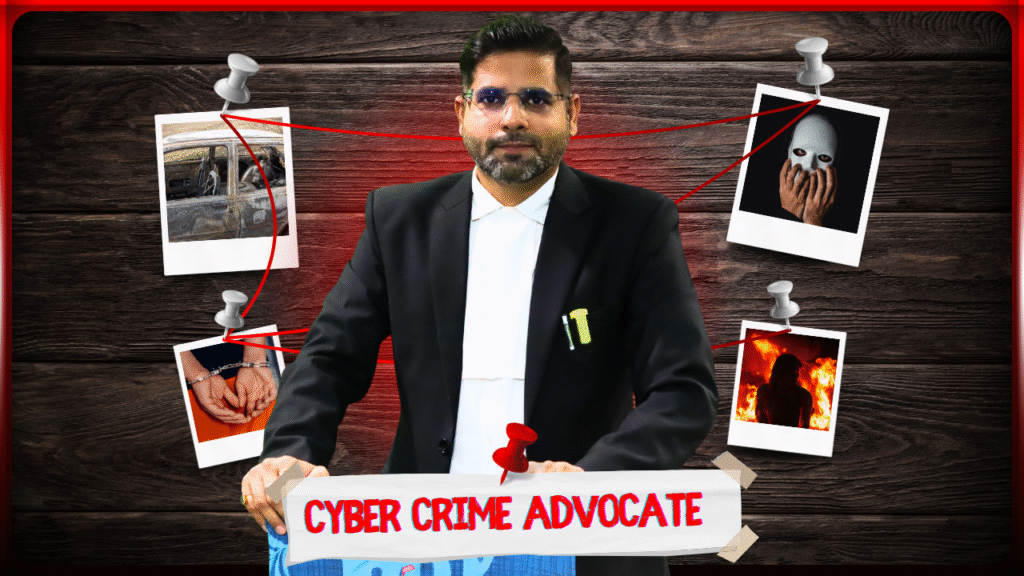
Author name: admin

cyber crime lawyer for online money fraud recovery

In today’s fast-growing digital world, millions of Indians use online platforms for shopping, investment, gaming, and money transfers. But with convenience comes risk — online money fraud cases have increased rapidly in recent years. Victims lose hard-earned money to fake apps, scam websites, or fraudulent bank transactions. In such cases, an Cyber Crime Lawyer plays a crucial role in helping victims recover their money, unfreeze bank accounts, and file proper legal complaints under the Information Technology Act, 2000, and Indian Penal Code (IPC). What is Online Money Fraud? Online money fraud occurs when cybercriminals use the internet or electronic systems to cheat or deceive someone for financial gain. Common examples include: Fake Investment or Trading Platforms – Scammers promise high returns through fake stock or crypto websites. Online Job or Work-from-Home Scams – Victims are asked to pay “registration fees” or “security deposits.” E-commerce Fraud – Payment is made online, but no product is delivered. Loan App Scams – Fraudulent apps steal personal data and extort money. Phishing or OTP Fraud – Criminals impersonate banks or government officers to steal login details or OTPs. Fake Charity and Lottery Messages – People are tricked into transferring funds for false reasons. These crimes fall under Sections 419, 420 of IPC (Cheating) and Sections 66C, 66D of the IT Act (Identity Theft and Online Fraud). How a Cyber Crime Lawyer Helps in Money Fraud Recovery An expert cyber crime lawyer can provide end-to-end assistance in online money fraud cases, including: Filing a Cyber Complaint ProperlyThe first step is filing an official complaint on the National Cyber Crime Portal www.cybercrime.gov.in or at the nearest Cyber Police Station.A cyber lawyer ensures your complaint is drafted correctly and includes all necessary documents. Communication with the Cyber Cell and BankThe lawyer will coordinate with the Investigating Officer (IO) and the bank’s nodal officer to trace the transaction and block the fraudster’s account. Filing a Representation Letter for Account Unfreeze or RecoveryIf your account has been frozen during investigation, your lawyer will prepare a representation letter explaining your innocence and request for lien removal. Legal Follow-Up and Representation in Court (if needed)In some cases, funds can only be released through a court order. A cyber lawyer can represent you before the Magistrate Court or High Court to seek recovery or unfreeze orders. Tracking the Money TrailWith proper legal procedure, a cyber lawyer works with authorities to trace the money flow between bank accounts and ensure it is returned to the rightful owner. Advising on Preventive MeasuresThe lawyer also educates clients on cyber hygiene, online safety, and how to prevent similar incidents in the future. Steps to Recover Money Lost in Online Fraud Report ImmediatelyCall 1930 (National Cyber Helpline) or file a complaint on www.cybercrime.gov.in within 24 hours of the transaction. Inform Your BankNotify your bank’s branch and customer care immediately to block the transaction and mark it as fraudulent. Collect EvidenceGather all transaction IDs, payment receipts, chat screenshots, email confirmations, and account details related to the fraud. Consult a Cyber Crime LawyerA professional lawyer will help you draft your complaint and communicate with both the Cyber Cell and your bank. File a Legal RepresentationIf your account is frozen, or funds are under investigation, your lawyer will submit a representation letter to the Investigating Officer requesting unfreezing and refund. Follow Up RegularlyPersistence and proper documentation are key. Regular follow-ups ensure your case moves faster through the system. Safety Tips from Advocate Deepak (Cyber Crime Lawyer) Never share OTPs, passwords, or UPI PINs — not even with someone claiming to be from your bank or RBI. Use only verified apps and official websites for shopping or investment. Avoid clicking on unknown links or attachments in emails or messages. Do not respond to job or lottery offers that ask for payment in advance. Use strong passwords and enable two-factor authentication for all banking apps. Regularly check your bank and UPI transactions for suspicious activities. Report any fraud immediately to the Cyber Crime Helpline 1930 or via www.cybercrime.gov.in. Avoid using public Wi-Fi for financial transactions or online shopping. Documents Needed for Filing an Online Fraud Complaint Valid ID proof (Aadhaar, PAN) Bank statement showing disputed transactions Transaction IDs and payment proofs Screenshots of messages, chats, or websites involved in fraud Email or communication records with the scammer or bank Online money fraud can happen to anyone, but what matters is how quickly you act. Reporting promptly and hiring a qualified cyber crime lawyer can significantly improve your chances of recovering your money and unfreezing your account. An expert cyber lawyer understands both the technical and legal aspects of digital frauds, ensuring that your complaint is properly represented and your case is handled efficiently. Remember: the sooner you act, the higher the chances of recovering your lost funds. Disclaimer This article is written purely for educational and informational purposes. We are not engaged in any solicitation, promotion, or advertisement. The purpose of this blog is to spread awareness regarding cyber law, online money fraud recovery, and bank lien removal procedures.For official help, visit www.cybercrime.gov.in or contact the National Cyber Helpline 1930.

cyber crime lawyer for online money fraud recovery Read More »

How to found Cyber crime advocate for 420 and 66D cases

In the digital age, cybercrime has become one of the fastest-growing criminal activities across India. From online scams and fraudulent money transfers to identity theft and fake job offers, thousands of people fall victim to these crimes every year. When a person becomes involved—whether as a victim or by mistake—a Cyber Crime Advocate plays a vital role in ensuring justice under the Indian Penal Code (IPC) and Information Technology (IT) Act. The two most common legal sections under which cybercrime cases are registered are Section 420 IPC (Cheating and Dishonestly Inducing Delivery of Property) and Section 66D of the IT Act, 2000 (Cheating by Personation Using Computer Resources). If your bank account is frozen, or you’ve received a notice or summon under these sections, consulting an experienced cyber crime lawyer is essential. Understanding Section 420 IPC and Section 66D IT Act Section 420 IPC – Cheating and Dishonest Inducement This section applies when a person cheats another individual and induces them to deliver money or property through false representation. It is a non-bailable and cognizable offence, meaning the police can arrest the accused and start an investigation without a warrant. Punishment: Up to 7 years imprisonment and fine. Section 66D IT Act – Cheating by Personation through Computer This section deals with cheating using electronic means, such as fake websites, emails, social media, or online messages. Common in cases like online job fraud, crypto scams, and phishing. Punishment: Up to 3 years imprisonment and fine up to ₹1 lakh. Together, Sections 420 and 66D cover most online frauds reported to India’s Cyber Cells today. When Do You Need a Cyber Crime Advocate? You should consult a Cyber Crime Advocate immediately if: Your bank account has been frozen or lien marked due to an online fraud complaint. You have received a police notice, summon, or email mentioning 420 IPC or 66D IT Act. You are wrongly implicated in a case related to an online transaction. You are a victim of cyber fraud, online job scam, or money-transfer fraud. You need to file or respond to a cyber complaint before police or court. A professional cyber lawyer can represent you before the Cyber Cell, Police Station, or Court, ensuring your side of the story is heard and protecting you from wrongful prosecution. Legal Procedure in 420 and 66D Cases Filing or Receiving a ComplaintA victim files a complaint through www.cybercrime.gov.in, or the Cyber Cell may receive one from another state or bank. Freezing of Bank AccountIf your account is linked to the transaction, the Cyber Cell may issue a freezing order to the bank under CrPC Section 91. Notice or Summon from Cyber CellThe investigating officer (IO) may contact you by phone, email, or letter requesting documents and transaction proof. Representation through Cyber Crime AdvocateThe lawyer prepares a representation letter, submits all legal proofs (bank statement, ID, chat records), and communicates with the IO. Investigation and ResponseOnce your innocence or clarity is established, the Cyber Cell may issue a No Objection Certificate (NOC) for unfreezing your account. Court Petition (if needed)If the Cyber Cell delays the process, your lawyer can file a petition under CrPC 457 or 482 before the Magistrate or High Court to unfreeze your account or close the case. Documents Required for Legal Representation Copy of FIR or acknowledgment number from www.cybercrime.gov.in Bank statement showing the disputed transaction Aadhaar, PAN, and contact details Proof of source of funds or business transaction Communication records or screenshots Any email or letter from the Cyber Cell or police Safety Tips from Advocate Deepak (Cyber Crime Lawyer) Never share OTPs, bank details, or login credentials — not even with someone claiming to be from your bank or government. Avoid P2P crypto or money-transfer deals with strangers online. Verify all online investment platforms, job offers, and e-commerce sellers before making payments. Report cyber frauds immediately to 1930 or www.cybercrime.gov.in. Keep evidence safely stored — screenshots, chats, and bank receipts help your case. Do not panic if you receive a cyber notice — contact a cyber lawyer and follow legal procedure calmly. Educate your family and employees about online fraud prevention. Cyber fraud cases under Section 420 IPC and Section 66D of the IT Act can be stressful and complex, especially when your finances and reputation are at stake. A qualified Cyber Crime Advocate can help you respond legally, get your bank account unfrozen, and protect your rights. Remember: being accused or linked to a cybercrime case doesn’t always mean you’re guilty — but timely legal action and proper representation are the keys to justice. Disclaimer This article is written purely for educational and informational purposes. We are not engaged in any solicitation, promotion, or advertisement. The purpose of this blog is to spread awareness regarding cyber law, online fraud cases, and bank lien removal procedures.For official help, visit www.cybercrime.gov.in or contact the National Cyber Helpline 1930.

How to found Cyber crime advocate for 420 and 66D cases Read More »

Expert cyber law lawyer for online fraud cases

In today’s digital age, online fraud has become one of the most common and dangerous crimes in India. From phishing and fake investment apps to online shopping scams and cryptocurrency frauds, cybercriminals are using new tactics every day. Victims of such frauds often find their bank accounts frozen, money lost, and digital identities misused. In these situations, the guidance of an expert cyber law lawyer is essential to protect your rights, recover lost funds, and navigate the complex investigation process under the Information Technology (IT) Act, 2000 and Indian Penal Code (IPC). What is Online Fraud? Online fraud refers to any kind of deception conducted through digital means with the intent to steal money, data, or identity. Some of the most common types include: Phishing and OTP scams – Fraudsters impersonate banks or officials to steal OTPs or passwords. Fake job or work-from-home offers – Victims are tricked into paying “registration fees” for fake positions. Crypto and investment scams – Online trading and P2P exchanges used to deceive investors. E-commerce frauds – Payment made but product never delivered. Loan app scams – Fake loan apps steal personal data and extort victims. Social media frauds – Impersonation or blackmail through Facebook, Instagram, or WhatsApp. Such crimes are punishable under Sections 419, 420 of IPC and Sections 66C, 66D of the IT Act, which deal with identity theft, cheating, and deception through computer resources. Role of an Expert Cyber Law Lawyer A cyber law lawyer specializes in handling legal issues that arise from the use of the internet, technology, and digital communications. When you face an online fraud, an expert cyber lawyer can help you in the following ways: Filing a Cyber Crime Complaint ProperlyDrafting and filing your complaint in the correct format with the Cyber Crime Police Station or via www.cybercrime.gov.in. Representation before the Cyber Cell and CourtCommunicating with the Investigating Officer (IO), submitting documents, and ensuring your case is handled legally. Bank Account Unfreeze & Lien RemovalIn case your account is frozen due to a related complaint, the lawyer will prepare a representation letter, collect evidence, and apply for No Objection Certificate (NOC) to unfreeze the account. Recovery of Lost MoneyThrough timely legal action, the lawyer can request reversal of funds, coordinate with the bank’s nodal officer, and initiate proceedings against the accused. Preventive Legal AdviceAdvising on cyber safety, data protection, and steps to prevent future fraud. Process of Handling Online Fraud Cases File an FIR or Online ComplaintVisit www.cybercrime.gov.in or call 1930 (National Cyber Helpline). Preserve EvidenceSave all screenshots, chats, payment receipts, and transaction IDs. Contact an Expert Cyber LawyerThe lawyer will draft a detailed representation including your evidence and submit it to the concerned authority. Follow Up with the Investigating Officer (IO)Your lawyer coordinates with the IO for case updates, account unfreeze, and further investigation. File Legal Proceedings if RequiredIf the Cyber Cell does not act promptly, the lawyer can move to Magistrate Court or High Court under appropriate legal provisions. Safety Tips from Advocate Deepak (Cyber Crime Lawyer) Never share OTPs, passwords, or CVV numbers — not even with someone claiming to be from your bank. Avoid clicking on suspicious links sent through SMS, WhatsApp, or email. Always verify online sellers, loan providers, and trading apps before making payments. Use strong passwords and enable two-factor authentication on all digital platforms. Do not respond to blackmail or extortion messages — report them to 1930 or local cyber police immediately. Keep your bank registered mobile number updated to track all account activities. Avoid using public Wi-Fi for financial transactions or sharing sensitive information. Educate your family members and employees about online scams and preventive practices. When to Contact a Cyber Law Expert If your bank account is frozen after a suspicious transaction. If you have lost money in an online fraud or scam. If someone has misused your identity or account details. If you are being harassed, blackmailed, or extorted online. If you have received a notice or summon from the Cyber Crime Police. A cyber law expert will ensure you are not wrongfully accused and that your financial and digital rights are restored through legal procedures. Cyber fraud can happen to anyone — but timely action and professional legal help make all the difference. An expert cyber law lawyer not only assists in complaint filing and account unfreezing but also provides crucial guidance to keep your data and money safe. Always remember: Act fast, stay calm, and consult a cyber crime lawyer before taking any step. Awareness, evidence, and expert legal representation are the keys to recovering from online fraud. Disclaimer This article is written purely for educational and informational purposes. We are not engaged in any solicitation, promotion, or advertisement. The purpose of this blog is to spread awareness regarding cyber law, bank lien removal, and online fraud cases.For official help, visit www.cybercrime.gov.in or call the National Cyber Helpline 1930.

Expert cyber law lawyer for online fraud cases Read More »

Scroll to Top