
GRM Portal and Bank Account Lien Removal: How to Generate a Grievance ID and What to Do If the Bank or Cyber IO Rejects It
A bank account lien, debit freeze or hold can create serious financial difficulties, particularly when the restriction is connected with a cyber crime investigation, online fraud complaint, UPI transaction, digital payment or disputed financial transaction.
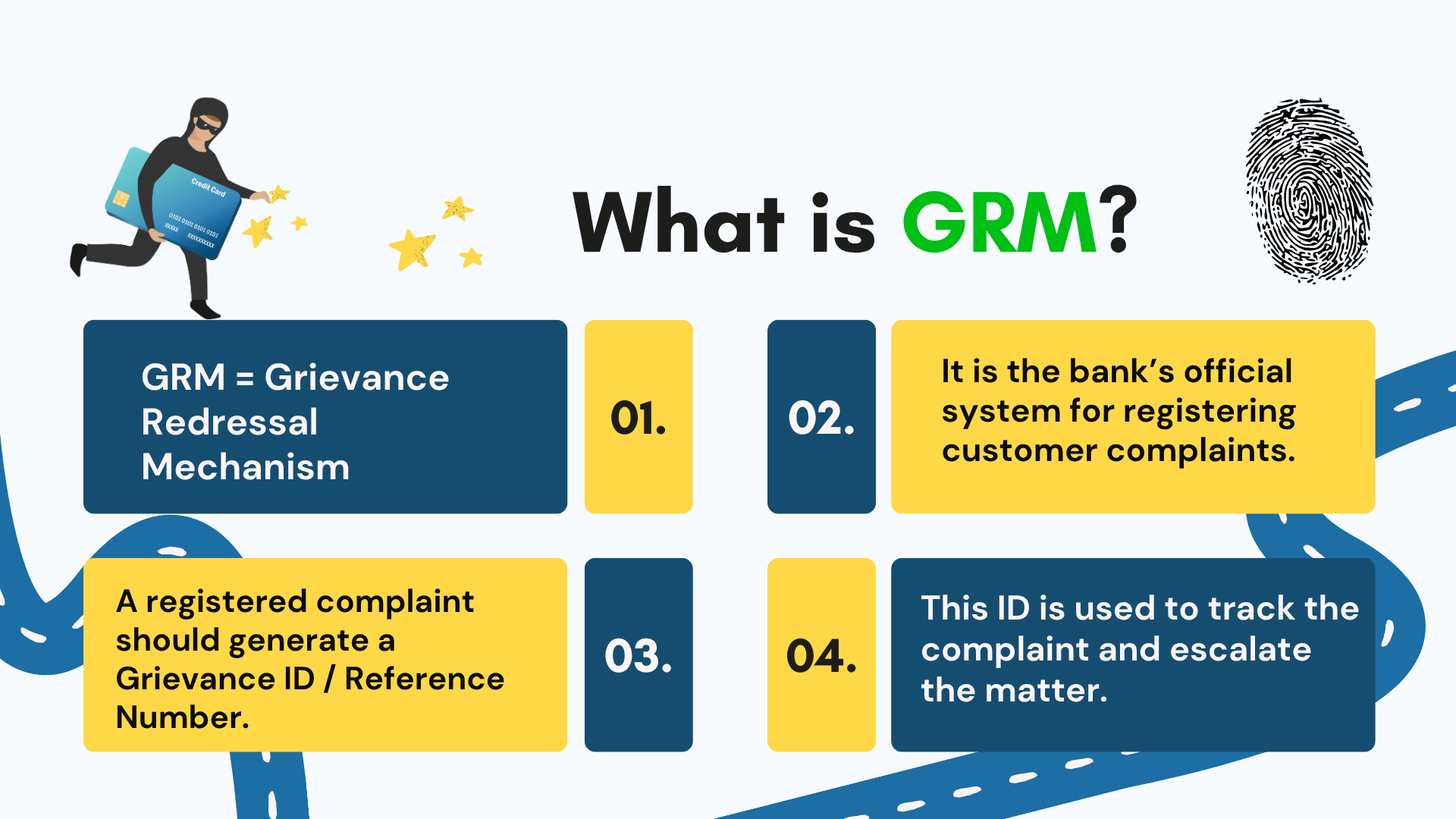
Many account holders are advised to approach the bank’s GRM or Grievance Redressal Mechanism to register their complaint and obtain a Grievance ID. However, people often have questions such as:
- What is a GRM Portal?
- How can I generate a Grievance ID for bank lien removal?
- What should I do if the bank refuses to register my grievance?
- What happens after the Grievance ID is submitted to the Cyber Investigating Officer?
- What if the Cyber IO rejects my grievance?
- Can a cyber crime lawyer help remove a bank account lien?
- How can I legally challenge a continuing bank freeze or lien?
This article explains the process in simple terms.
What Is a GRM Portal?
GRM generally refers to a Grievance Redressal Mechanism through which a customer can formally register a complaint with a bank or financial institution.
When a customer has a problem relating to an account, transaction, lien, hold, debit freeze or other banking restriction, the grievance mechanism provides a formal route for raising the issue.
After registration, the bank may provide a Grievance ID, complaint number or reference number. This number is important because it provides a record that the complaint was formally submitted.
However, a Grievance ID itself does not automatically remove a bank lien.
The actual removal of a lien may depend upon the reason for the restriction, the bank’s internal process, the instructions received from a Cyber Crime Police Station or Investigating Officer, and where necessary, appropriate legal proceedings.
What Is a Bank Account Lien?
A bank account lien is a restriction placed on a particular amount or funds in a bank account.
For example, if ₹50,000 is marked as a lien, the account holder may continue to see the balance in the account, but the lien-marked amount may not be available for withdrawal or use.
A lien may arise in different circumstances, including:
- Cyber fraud investigations
- Online financial fraud
- UPI fraud complaints
- Suspicious transactions
- Disputed bank transfers
- Police or Cyber Cell requests
- Investigation into suspected proceeds of crime
- Regulatory or legal directions
- Other banking or contractual reasons
The exact reason for the lien should be identified before deciding the appropriate remedy.
Bank Lien vs Bank Account Freeze
A lien and a complete account freeze are not necessarily the same thing.
In a lien situation, a specific amount may be placed on hold.
In a debit freeze or complete account restriction, the customer may face wider restrictions on withdrawals, transfers or other account operations.
Therefore, the first step should be to obtain clarity from the bank about:
What has been restricted?
How much has been restricted?
Why has it been restricted?
Which authority requested the restriction?
What reference number is connected with the restriction?
This information can be extremely important when preparing a representation for lien removal.
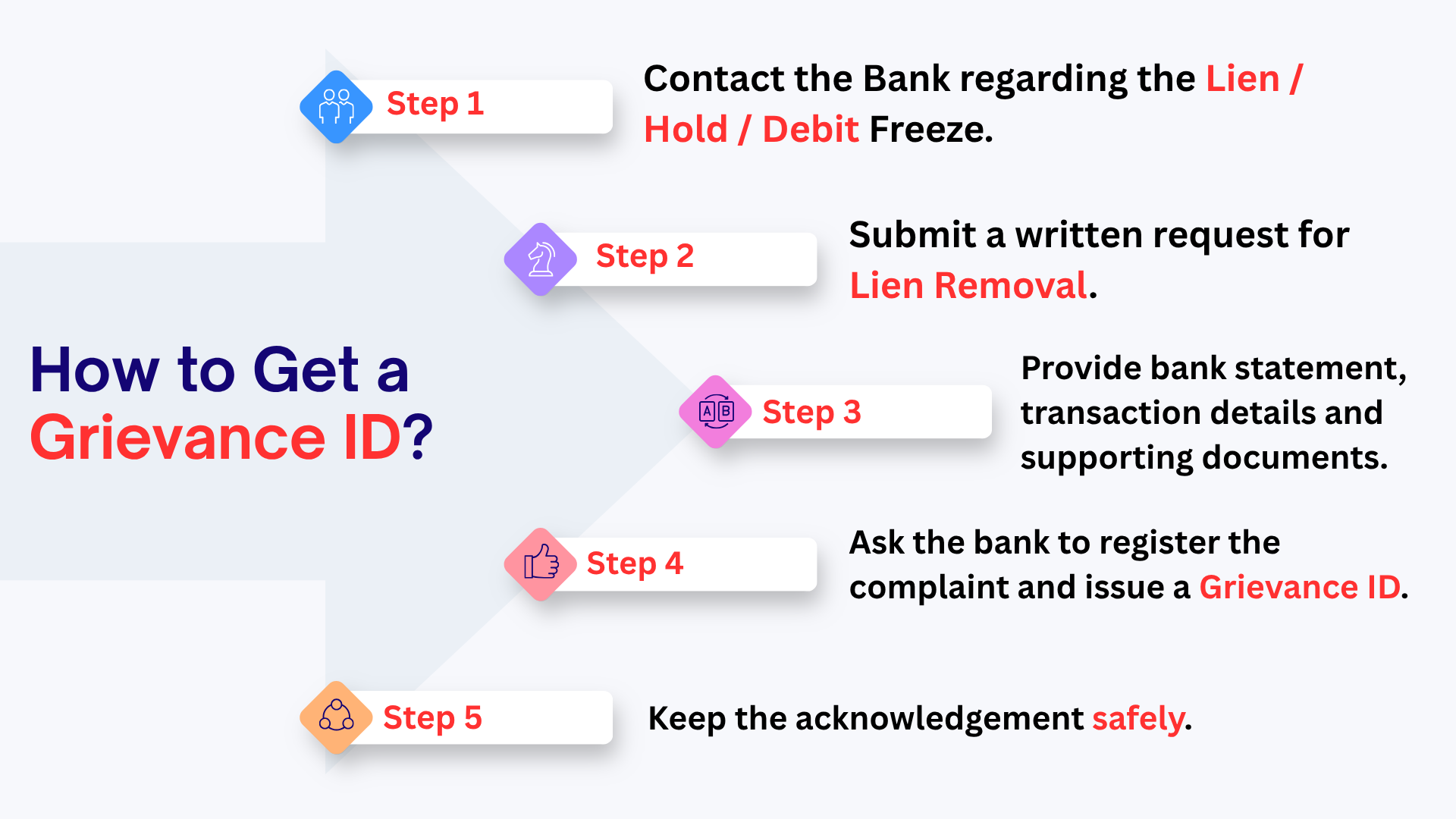
How to Generate a Grievance ID for Bank Lien Removal?
The process generally starts by making a formal complaint to the bank.
Step 1: Contact the Bank
Approach the bank through its official customer service or grievance channel.
Explain that your account has a:
- Lien
- Hold
- Debit freeze
- Account restriction
- Cyber crime-related restriction
Ask the bank to provide details regarding the restriction.
Step 2: Submit a Written Grievance
Submit a written complaint requesting review and removal of the lien, where legally justified.
The complaint should clearly explain:
- Account holder’s name
- Bank account details
- Date of the transaction
- Amount under lien
- Transaction reference or UTR
- Source of the funds
- Nature of the transaction
- Reason why the funds are legitimate
- Supporting documents
- Request for removal/review of the lien
Step 3: Attach Supporting Documents
Depending upon the circumstances, relevant documents may include:
- Bank statement
- Transaction statement
- UPI transaction details
- Payment receipts
- Invoices
- Agreements
- Salary or business documents
- Proof of source of funds
- Identity documents
- Correspondence with the bank
- Cyber Crime complaint-related documents
- Any communication received from the investigating authority
Only relevant documents should be submitted.
Step 4: Obtain the Grievance ID
After registering the complaint, request the bank to provide the:
Grievance ID / Complaint Number / Reference Number
This number should be preserved carefully.
It can be used for:
- Tracking the complaint
- Further correspondence
- Escalation
- Communication with the bank
- Communication with the investigating authority
- Establishing that a formal grievance was raised
What If the Bank Refuses to Generate a Grievance ID?
One of the common difficulties faced by account holders is that the bank may not properly register the complaint or may refuse to provide a complaint/reference number.
In such a situation, the account holder should avoid relying only on verbal communication.
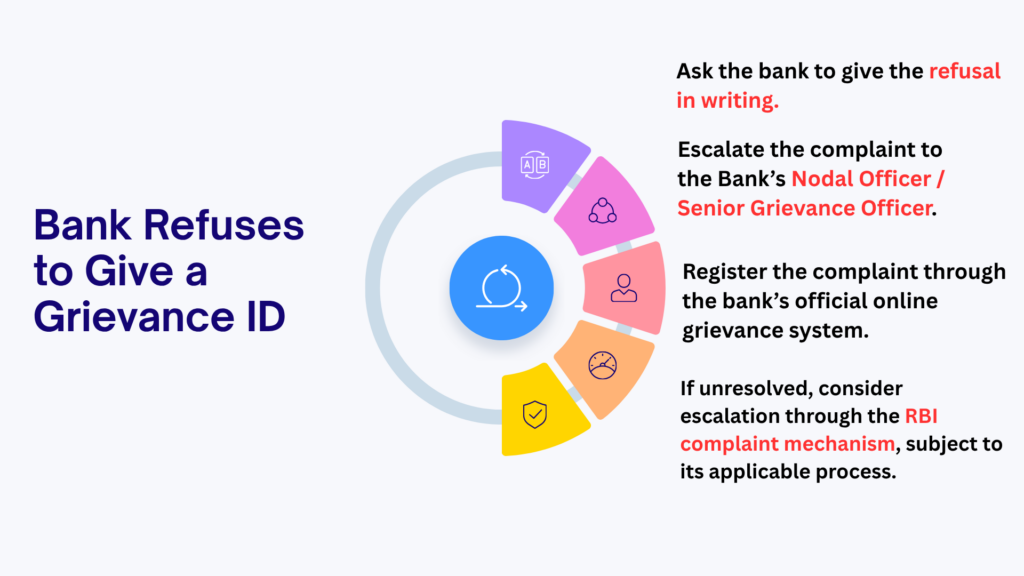
The person can ask the bank to provide the reason for refusal in writing.
The customer can also use the bank’s other official grievance channels, where available, and escalate the matter to the appropriate senior grievance authority or nodal officer.
Maintain evidence of every communication, including:
- Emails
- Complaint acknowledgements
- Letters
- Bank responses
- Screenshots
- Transaction records
- Reference numbers
A documented trail is particularly important when the matter subsequently requires escalation.
What Happens After Getting the Grievance ID?
Obtaining the Grievance ID is generally only the beginning of the process.
If the lien is connected with a cyber crime investigation, the next important issue is identifying the concerned Cyber Investigating Officer or Cyber Crime Police authority.
The account holder may need to submit a representation explaining why the funds are legitimate and why the continued restriction should be reviewed.
The investigating authority may examine:
- The disputed transaction
- Source of funds
- Transaction chain
- Beneficiary details
- Complaint allegations
- Bank records
- Digital evidence
- Statements and supporting documents
The outcome depends on the facts and the investigation.
What Is the Role of a Cyber Investigating Officer?
The Cyber Investigating Officer, commonly referred to as the Cyber IO, may be investigating the underlying cyber crime complaint.
Where a bank account or particular amount has been restricted in connection with an investigation, the IO may consider the material placed before the investigating agency.
A person claiming that the money is legitimate should provide a clear documentary explanation rather than simply requesting that the lien be removed.
For example, if the disputed amount came from a genuine business transaction, relevant invoices, agreements, payment records and corresponding bank entries may help explain the transaction.
What If the Cyber IO Rejects the Grievance?
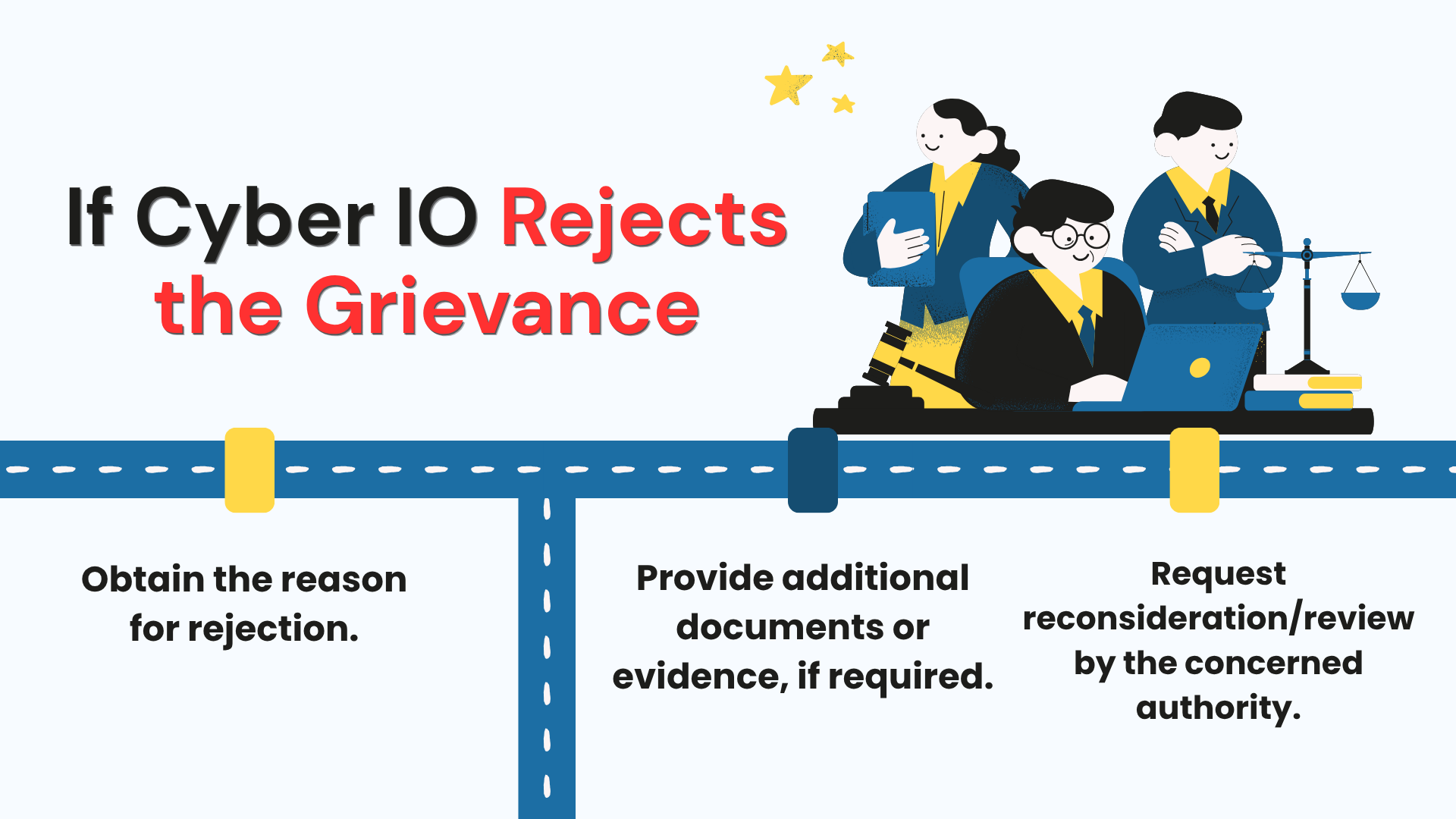
If the representation or grievance is rejected, the next step should be to understand why it was rejected.
The rejection should not simply be ignored.
The account holder can consider preparing a further representation addressing the specific concerns raised by the investigating authority.
For example, if additional transaction documents are required, those documents can be submitted.
If the investigating authority believes that the transaction is connected with a particular complaint, the account holder may need to explain the transaction chain and provide evidence showing the legitimate nature of the funds.
The appropriate course depends upon the facts of the case.
What Documents Can Support a Lien Removal Request?
A strong representation should be supported by relevant documentary evidence.
Depending upon the case, documents may include:
Banking Documents
- Bank statement
- Account statement showing the lien
- Transaction details
- UTR number
- UPI reference
- Debit and credit entries
- Bank correspondence
Source of Funds Documents
- Salary records
- Business invoices
- GST-related records
- Agreements
- Purchase orders
- Sale documents
- Payment receipts
- Loan documents
- Investment records
Cyber Crime Related Documents
- Cyber Crime complaint details
- Police communication
- Notice received from the investigating agency
- Bank communication regarding lien
- Grievance ID
- Previous representations
The documents should be genuine, relevant and consistent with the transaction history.
How Can a Cyber Crime Advocate Help With Bank Lien Removal?
A Cyber Crime Advocate can assist in reviewing the facts, identifying the appropriate authority and preparing a structured legal representation.
A cyber lawyer may help with:
- Reviewing the bank’s lien communication
- Understanding the reason for the restriction
- Preparing a grievance representation
- Organising transaction evidence
- Preparing a representation to the Cyber IO
- Responding to notices
- Making representations before appropriate police authorities
- Advising on escalation options
- Considering appropriate court remedies where required
The objective is not merely to send a letter to the bank but to address the underlying reason for the restriction.
What If the Bank Says the Lien Was Placed on Cyber Police Instructions?
In such cases, simply asking the bank to remove the lien may not resolve the issue.
The bank may state that the restriction was placed pursuant to communication or instructions from a law enforcement authority.
The account holder should then seek clarity regarding the relevant complaint, transaction and authority involved, subject to what information can legally be disclosed.
The appropriate representation may need to be directed toward the concerned investigating authority as well as the bank.
Can a Grievance ID Automatically Remove the Lien?
No.
A Grievance ID is primarily a complaint or tracking reference.
It demonstrates that a grievance has been registered, but it does not itself constitute an order for removal of a lien.
The underlying issue must be resolved through the appropriate banking, investigative or legal process.
What If the Bank Does Not Remove the Lien Even After Clearance?
If the competent authority has provided appropriate clearance or instructions but the bank continues the restriction, the account holder should communicate the clearance to the bank and request implementation.
If the bank still does not resolve the issue, escalation through the bank’s grievance mechanism may be considered.
Depending upon the circumstances, further legal remedies may also be available.
What If the Cyber Police Do Not Release the Lien?
If representations to the concerned investigating authority do not resolve the matter, the account holder may consider escalating the matter to the appropriate senior police authority.
Where the restriction continues and ordinary administrative remedies do not provide an effective solution, appropriate legal or court proceedings may be considered, depending upon the facts and applicable law.
A cyber crime lawyer can examine the case documents and advise on the appropriate legal remedy.
Bank Account Lien Removal Through Legal Remedy
Legal proceedings may become relevant when:
- The account holder has a legitimate source of funds.
- The disputed transaction does not belong to the account holder.
- The account has been restricted for an extended period.
- The person has already submitted relevant documents.
- Administrative representations have not resolved the issue.
- The continuation of the restriction requires judicial consideration.
The appropriate legal remedy depends upon the facts, nature of the investigation, authority involved and applicable procedural law.
Therefore, no single legal procedure applies to every bank lien case.
Common Mistakes to Avoid
1. Relying Only on Verbal Communication
Always try to maintain written records of important communications.
2. Submitting an Incomplete Representation
A vague request saying “remove my lien” may not adequately explain the transaction.
3. Ignoring the Transaction Trail
The source and movement of funds should be clearly explained where relevant.
4. Providing Incorrect Information
False or inconsistent information can seriously affect the matter.
5. Assuming a Grievance ID Means the Lien Is Removed
A Grievance ID is a complaint reference, not necessarily a release order.
6. Ignoring a Cyber Crime Notice
If a notice has been received from a Cyber Crime Police Station or Investigating Officer, it should be addressed appropriately.
Step-by-Step Bank Lien Removal Process
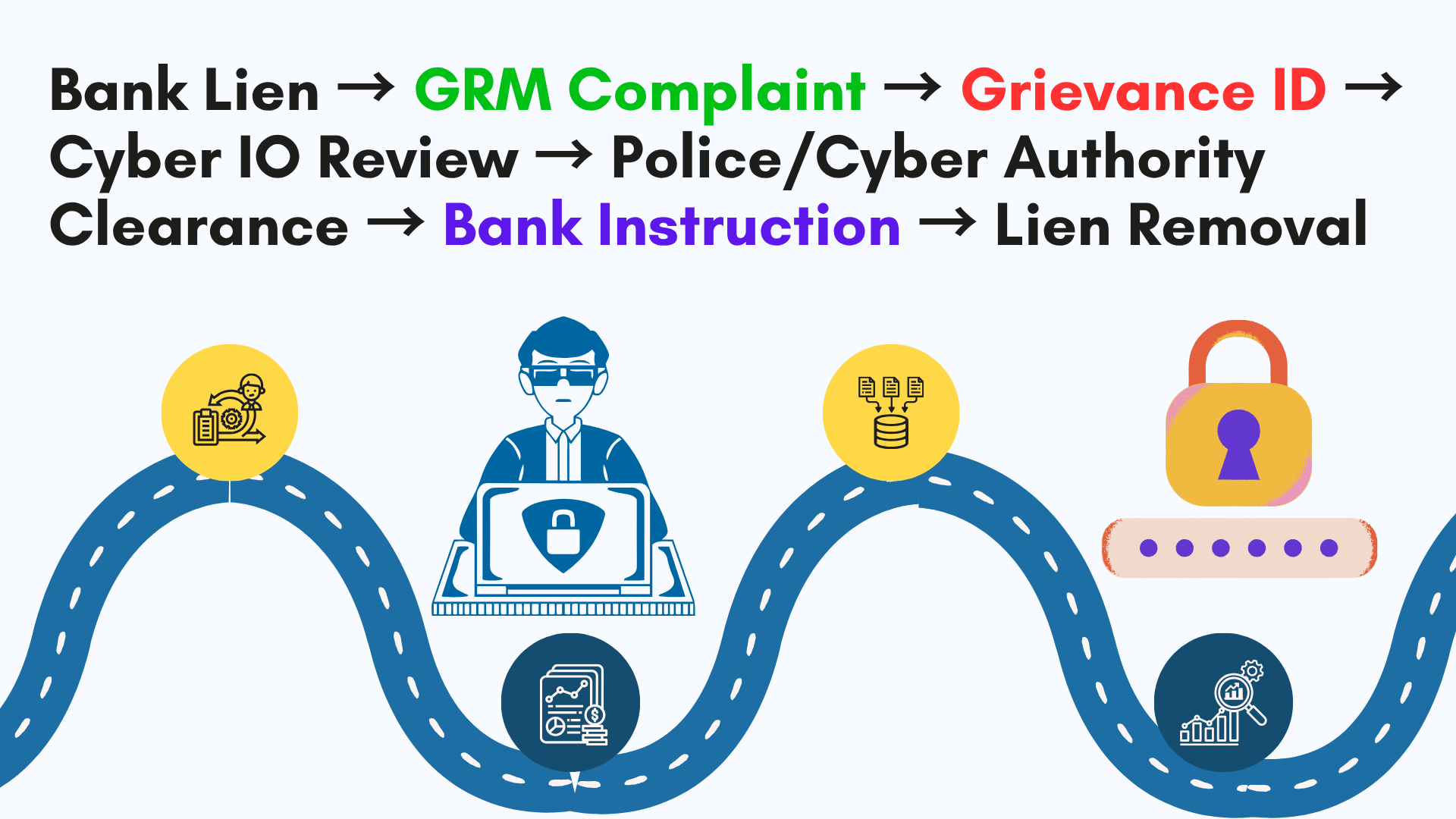
The process can be understood through the following sequence:
Bank Account Lien / Freeze
↓
Obtain Details of Restriction
↓
Submit Written Grievance to Bank
↓
Generate Grievance ID
↓
Collect Transaction and Source-of-Funds Documents
↓
Submit Representation to Cyber IO / Concerned Authority
↓
Investigation and Document Review
↓
Clearance / Appropriate Instruction, Where Granted
↓
Submit Clearance to Bank
↓
Bank Reviews and Processes Lien Removal
↓
If Not Resolved: Escalation / Appropriate Legal Remedy
Frequently Asked Questions
What is a GRM Portal for bank account lien?
GRM refers to a bank’s grievance redressal mechanism through which customers can formally register complaints relating to banking services, including certain disputes involving account restrictions.
How do I get a Grievance ID for lien removal?
Submit a formal grievance through the bank’s official grievance channel and request the complaint/reference number after registration.
What if my bank refuses to give me a Grievance ID?
Request the refusal in writing and escalate the matter through the bank’s designated grievance hierarchy and other applicable complaint channels.
Does a Grievance ID remove a bank lien?
No. A Grievance ID records the complaint. Lien removal generally requires resolution of the underlying issue and appropriate action by the competent authority and/or bank.
What if the Cyber IO rejects my grievance?
Obtain the reason for rejection, address the concerns with supporting evidence, and consider further representation or appropriate escalation.
Can a cyber crime lawyer help with bank account lien removal?
Yes. A Cyber Crime Lawyer or Cyber Crime Advocate can assist with reviewing the matter, preparing representations, organising evidence and advising on appropriate legal remedies.
How long does bank lien removal take?
There is no single fixed timeline applicable to every case. The time can depend upon the reason for the lien, the investigating authority, complexity of the transaction and the bank’s processing.
A bank account lien connected with a cyber crime complaint can be stressful, particularly when legitimate funds become inaccessible.
The correct approach is to create a proper documentary record rather than relying only on verbal requests. Start by obtaining details of the restriction, submit a formal grievance to the bank, obtain the Grievance ID, collect evidence regarding the transaction and source of funds, and submit an appropriate representation to the concerned Cyber Investigating Officer where the lien is connected with a cyber crime investigation.
If the bank refuses to register the grievance, or if the Cyber IO rejects the representation, the matter may require further escalation. Depending on the circumstances, representation before senior authorities or appropriate legal proceedings may be considered.
For complicated bank account lien removal, bank freeze removal, cyber fraud investigation and online financial fraud matters, professional assistance from an experienced Cyber Crime Advocate or Cyber Crime Lawyer can help ensure that the facts, documents and legal position are presented in an organised manner.


