
The rapid growth of digital banking, UPI payments, online shopping, cryptocurrency transactions, and social media has transformed daily life. However, it has also increased the risk of cyber crimes affecting individuals, businesses, professionals, and organizations. Basaveshwar Nagar, one of the prominent residential and commercial localities in Bengaluru, is no exception. Residents often encounter cyber frauds involving unauthorized banking transactions, online scams, identity theft, and digital financial crimes.
This article provides educational information about cyber crime laws in India, the investigation process, the role of a cyber crime advocate, and the legal remedies available to victims and affected individuals.
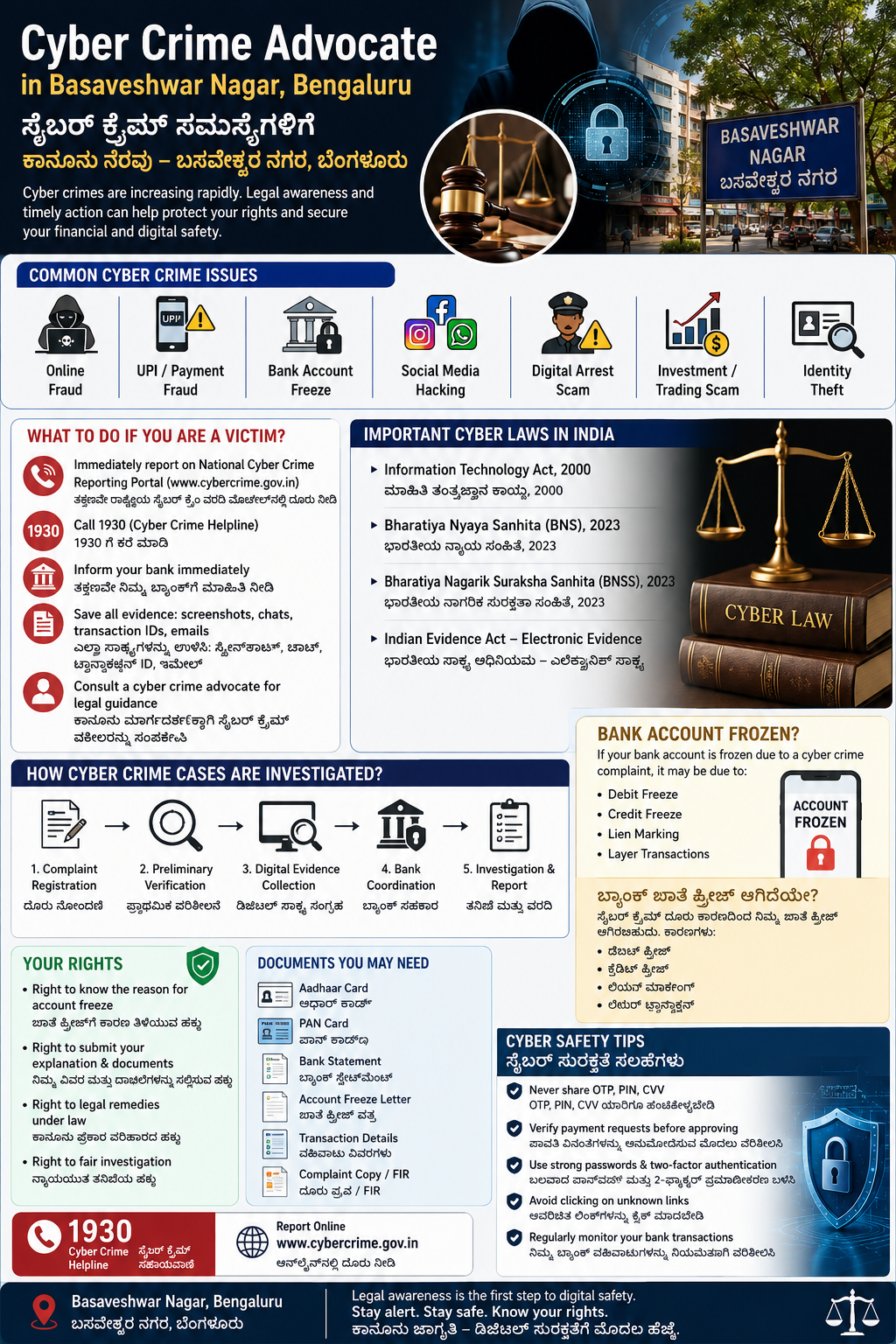
👉 What is Cyber Crime?
Cyber crime refers to any illegal activity committed using computers, smartphones, computer networks, or the internet. These offences may involve financial fraud, unauthorized access to computer systems, theft of personal information, digital impersonation, hacking, or misuse of electronic data.
With increasing digital transactions, cyber crimes have become one of the most commonly reported criminal offences across India.
👉 Why People Search for a Cyber Crime Advocate in Basaveshwar Nagar, Bengaluru
Cyber crime investigations often involve complex technical evidence, banking records, electronic transactions, and multiple investigating agencies. Individuals may seek legal guidance to understand the applicable laws, protect their legal rights, and respond appropriately during investigations.
A Cyber Crime Advocate in Basaveshwar Nagar, Bengaluru may assist in matters relating to:
- Online Banking Fraud
- UPI Fraud
- QR Code Scam
- Internet Banking Fraud
- Credit Card Fraud
- Debit Card Fraud
- Cryptocurrency Disputes
- Digital Arrest Scam
- WhatsApp Hacking
- Instagram Account Hacking
- Facebook Account Recovery
- Identity Theft
- Email Hacking
- Data Theft
- Business Email Compromise
- Sextortion
- Fake Investment Scam
- Online Trading Fraud
- Cyber Defamation
- Bank Account Freeze
- Bank Account Lien Cases
👉 Common Types of Cyber Crimes Reported in Basaveshwar Nagar
💳 UPI and Online Banking Fraud
UPI has become India’s most popular payment system. Fraudsters frequently misuse fake payment requests, phishing websites, QR codes, remote access applications, and fake customer care numbers to obtain unauthorized transfers.
Common examples include:
- Fake Google Pay requests
- PhonePe scams
- BHIM UPI fraud
- Paytm fraud
- Internet banking phishing
- Fake refund scams
🏦 Bank Account Freeze Due to Cyber Complaint
One of the fastest-growing legal issues involves bank accounts being frozen during cyber crime investigations.
Banks may temporarily restrict accounts when disputed funds are traced through multiple accounts during investigation.
Restrictions may include:
- Debit Freeze
- Credit Freeze
- Partial Hold
- Complete Freeze
- Lien Marking
- Layer Transactions
Many account holders discover the restriction only after attempting to withdraw money or complete a transaction.
📱 Social Media Crimes
Social media offences continue to increase every year.
Common cases include:
- WhatsApp Account Hacking
- Instagram Account Hacking
- Facebook Account Hacking
- Fake Social Media Profiles
- Online Harassment
- Cyber Bullying
- Fake Profile Creation
- Impersonation
💰 Cryptocurrency Fraud
Digital currency has created new opportunities but also increased cyber fraud.
Frequently reported matters include:
- USDT Disputes
- Binance P2P Transactions
- Fake Crypto Investment Platforms
- Wallet Theft
- Fake Trading Apps
- Token Scams
- Crypto Recovery Disputes
🎭 Digital Arrest Scam
Digital arrest scams involve fraudsters pretending to be officers from:
- CBI
- ED
- RBI
- Income Tax Department
- Cyber Police
Victims are threatened with arrest unless they transfer money immediately. Such calls are fraudulent and should be reported immediately.
👉 Important Cyber Laws Applicable in India
Cyber crime cases may involve provisions under:
- Information Technology Act, 2000
- Bharatiya Nyaya Sanhita (BNS), 2023
- Bharatiya Nagarik Suraksha Sanhita (BNSS), 2023
- Digital evidence laws applicable before Indian courts
The applicable legal provisions depend entirely upon the facts of each individual case.
👉 Investigation Process in Cyber Crime Cases
A cyber crime investigation generally follows these stages:
Step 1 – Complaint Registration
The victim submits a complaint through the National Cyber Crime Reporting Portal or the local Cyber Crime Police Station.
Step 2 – Verification of Digital Transactions
Investigators examine:
- Bank Accounts
- Mobile Numbers
- UPI IDs
- Device Information
- Transaction History
- IP Addresses
- Payment Gateways
Step 3 – Collection of Digital Evidence
Authorities may collect:
- Bank Statements
- Transaction IDs
- UPI Reference Numbers
- Email Records
- Mobile Data
- CCTV Footage
- Device Logs
- Server Information
Step 4 – Banking Coordination
Banks may receive instructions regarding:
- Freezing disputed funds
- Account verification
- Transaction analysis
- Fund tracing
👉 Rights of an Individual During Cyber Crime Investigation
Every person involved in a cyber crime investigation should understand their legal rights.
Depending on the circumstances, individuals may:
- Obtain information regarding the complaint
- Submit relevant documents
- Explain legitimate transactions
- Respond to investigation notices
- Seek legal remedies available under law
- Preserve electronic evidence supporting their case
Each matter depends upon its own facts and applicable legal provisions.
👉 Documents Commonly Required in Cyber Cases
The following documents are frequently required during investigation:
- Aadhaar Card
- PAN Card
- Bank Statement
- Account Freeze Letter
- Transaction History
- UPI Reference Number
- Complaint Copy
- Mobile Number Details
- Communication from Bank
- Police Notice (if any)
👉 Cyber Safety Tips
To reduce the risk of becoming a victim of cyber crime:
✔ Never share OTP or Banking PIN.
✔ Verify payment requests before approval.
✔ Enable Two-Factor Authentication.
✔ Avoid downloading unknown applications.
✔ Verify customer care numbers from official websites.
✔ Use strong passwords.
✔ Keep banking applications updated.
✔ Monitor your bank account regularly.
👉 Frequently Asked Questions
Can cyber crime complaints be filed online?
Yes. Many cyber offences can be reported through the National Cyber Crime Reporting Portal.
Can a frozen bank account be released?
The legal process depends on the facts of the investigation, applicable law, and the directions issued by the investigating authority or competent court.
Is digital evidence admissible in court?
Electronic records may be admissible subject to compliance with the applicable legal provisions governing digital evidence.
Can companies also become victims of cyber crime?
Yes. Businesses frequently report ransomware attacks, employee data theft, email compromise, online financial fraud, and hacking incidents.
👉 Conclusion
Cyber crime has become an increasingly important area of criminal law due to the widespread use of digital technology and online financial systems. Whether the issue relates to online fraud, UPI scams, bank account freezes, identity theft, cryptocurrency disputes, social media hacking, or digital arrest scams, understanding the applicable legal framework and investigation process is essential.
For residents of Basaveshwar Nagar, Bengaluru, awareness of cyber laws and timely preservation of digital evidence can play a crucial role in protecting legal rights during any cyber crime investigation.


